Woven roller shades
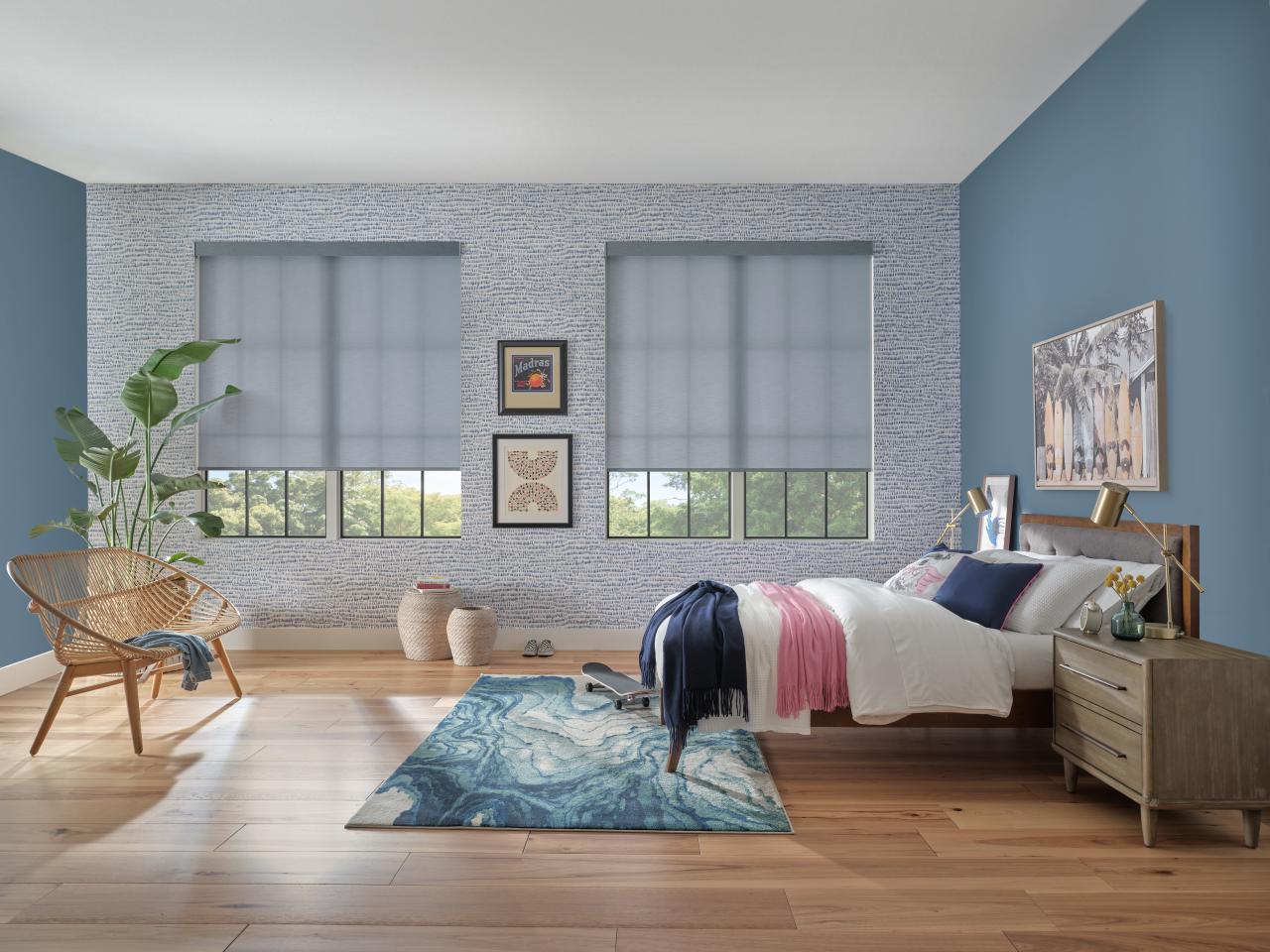
Alustra® Woven Textures® Roller Shades
Woven fabrics in a roller style for windows where texture is part of the room’s design.
- Woven fabric texture
- Compare opacity and privacy
- Compare current fabric and color choices

Hunter Douglas
Explore roller, Roman, cellular, woven, and sheer shade styles.
Chosen for your windows
Howard's Draperies helps you choose Hunter Douglas window shades in Boulder, Colorado, from simple rollers to soft Roman folds. Compare roller, screen, cellular, woven, sheer, and layered styles, along with options for wide windows and doors.
We’ll bring samples to your home so you can see the fabrics in your own light. Together, we’ll work through glare, views, privacy after dark, and how much light you want to block. Mounting depth, edge gaps, and control options all affect the finished result.
Measuring and professional installationHunter Douglas collection
See what makes each option different. We’ll help you compare samples and confirm the right fit during your consultation.
Woven roller shades
Woven fabrics in a roller style for windows where texture is part of the room’s design.
Woven Roman shades
Roman shades that combine woven fabric texture with soft folds.
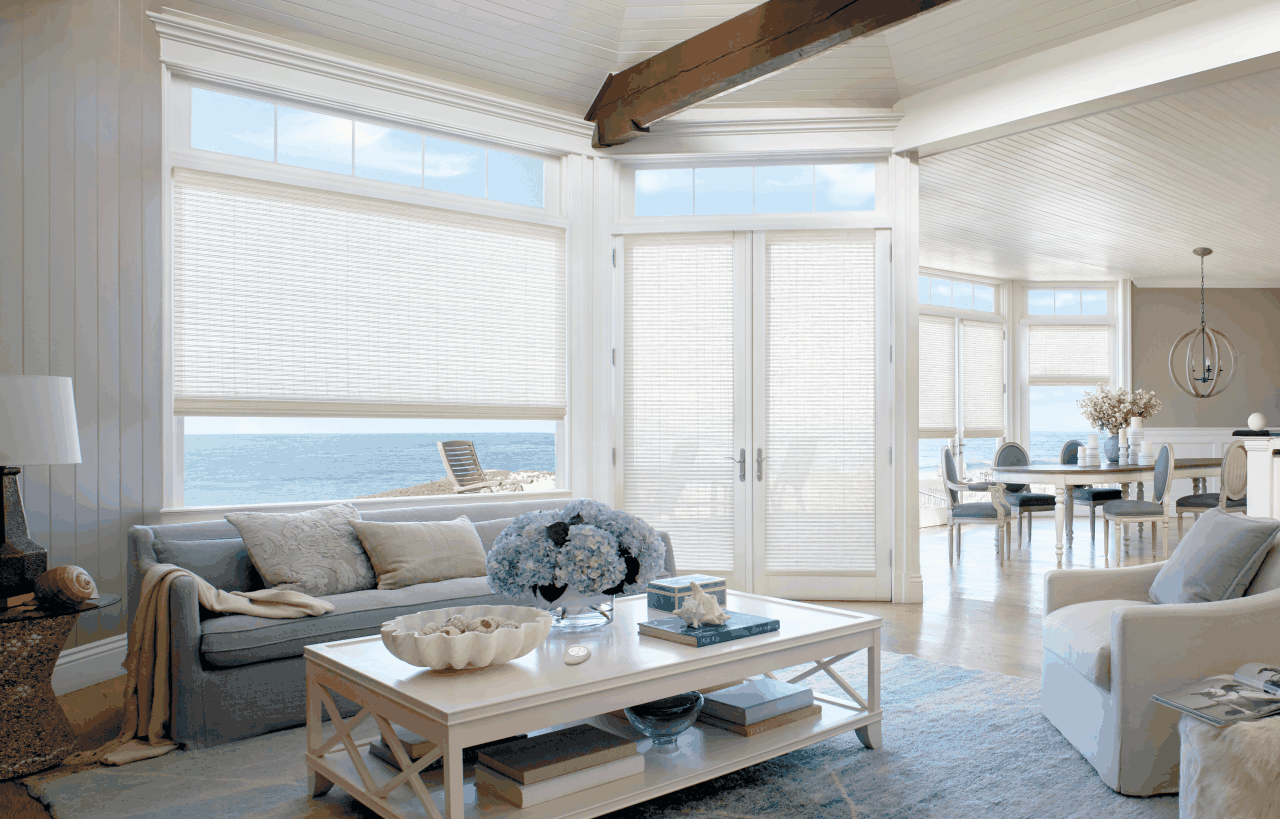
Woven wood shades
Natural woven shades crafted from woods, reeds, grasses, and bamboo.
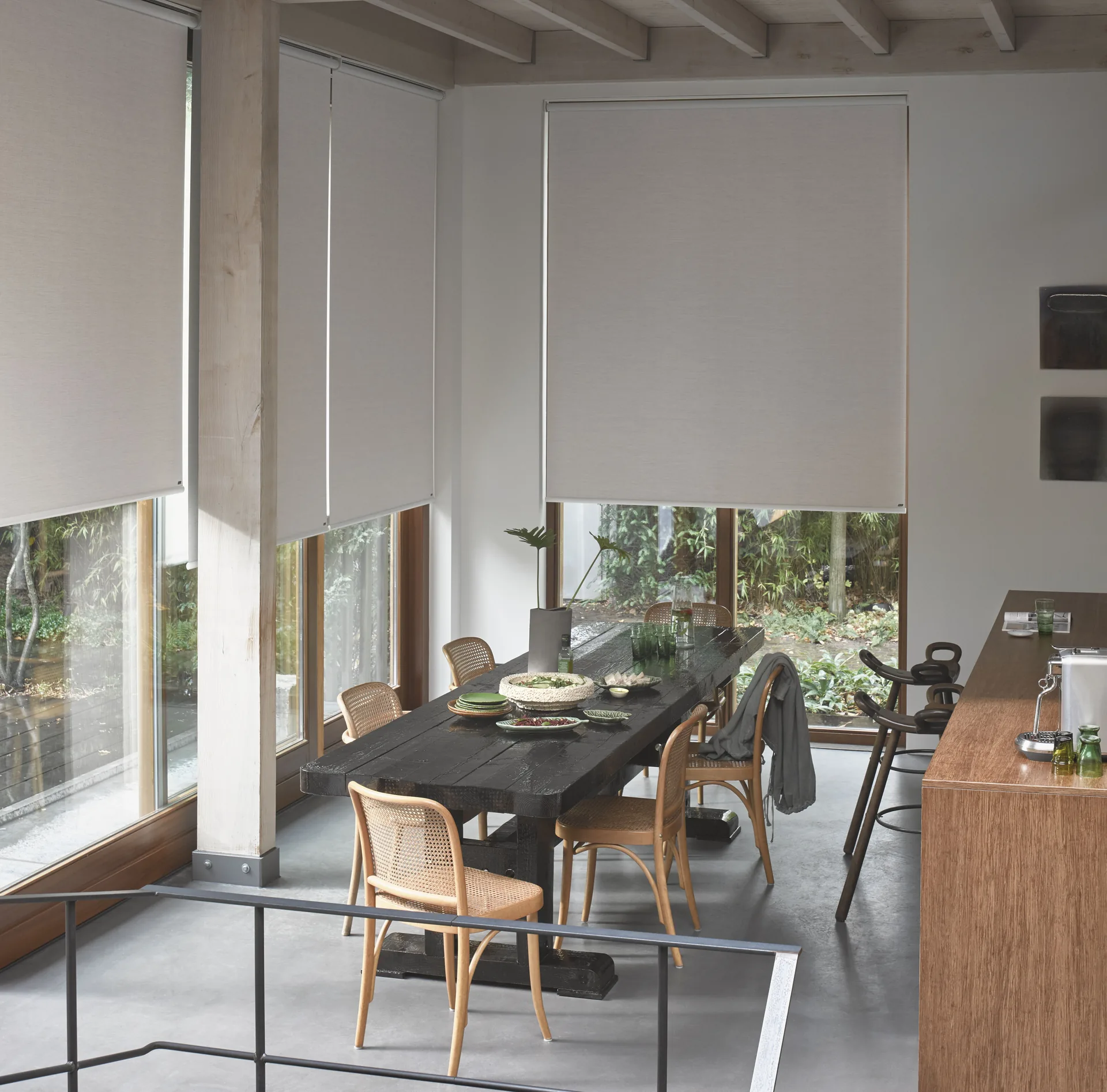
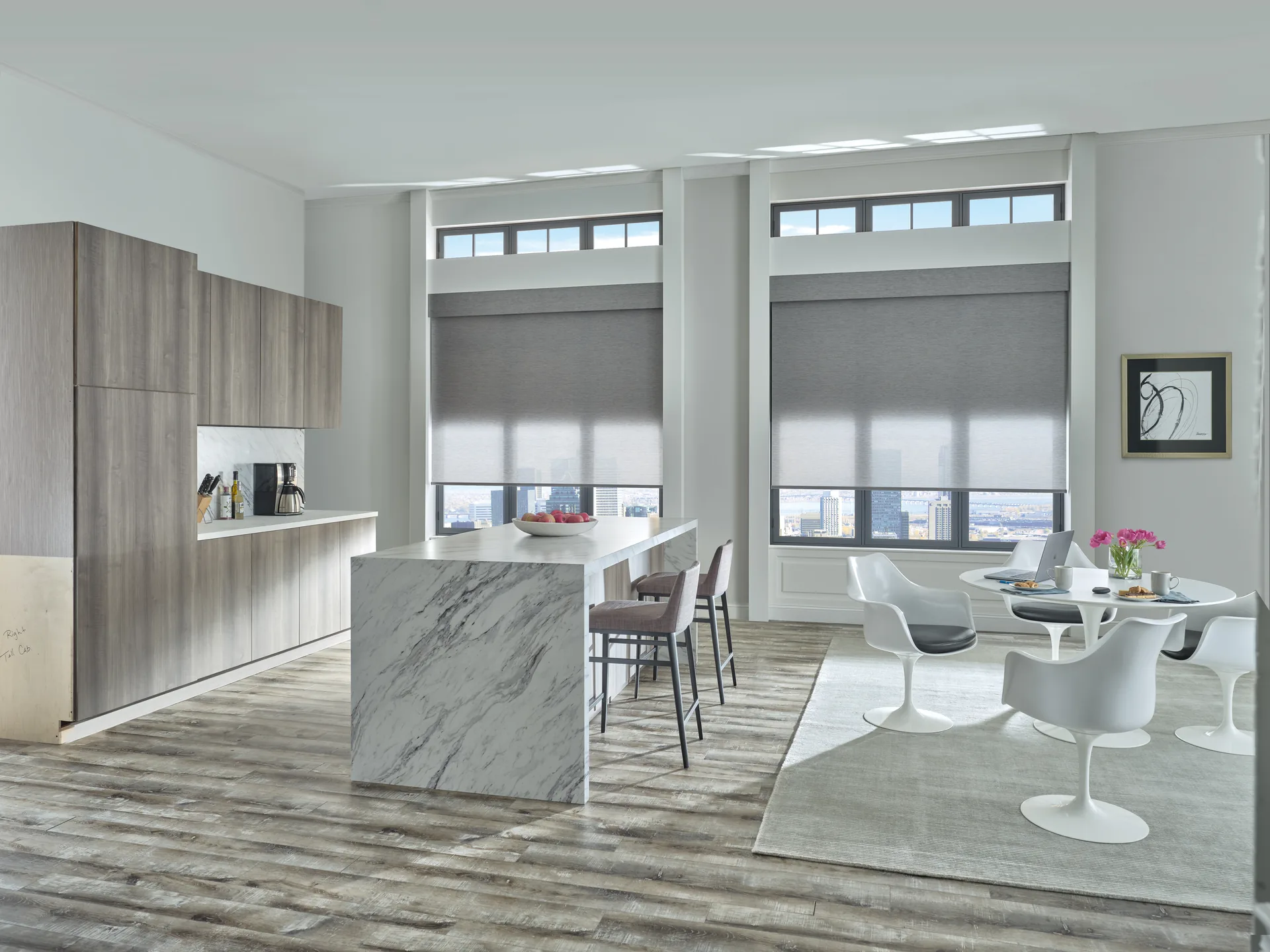
Roller shades
A tailored roller-shade option for simple operation, privacy, and modern light control.
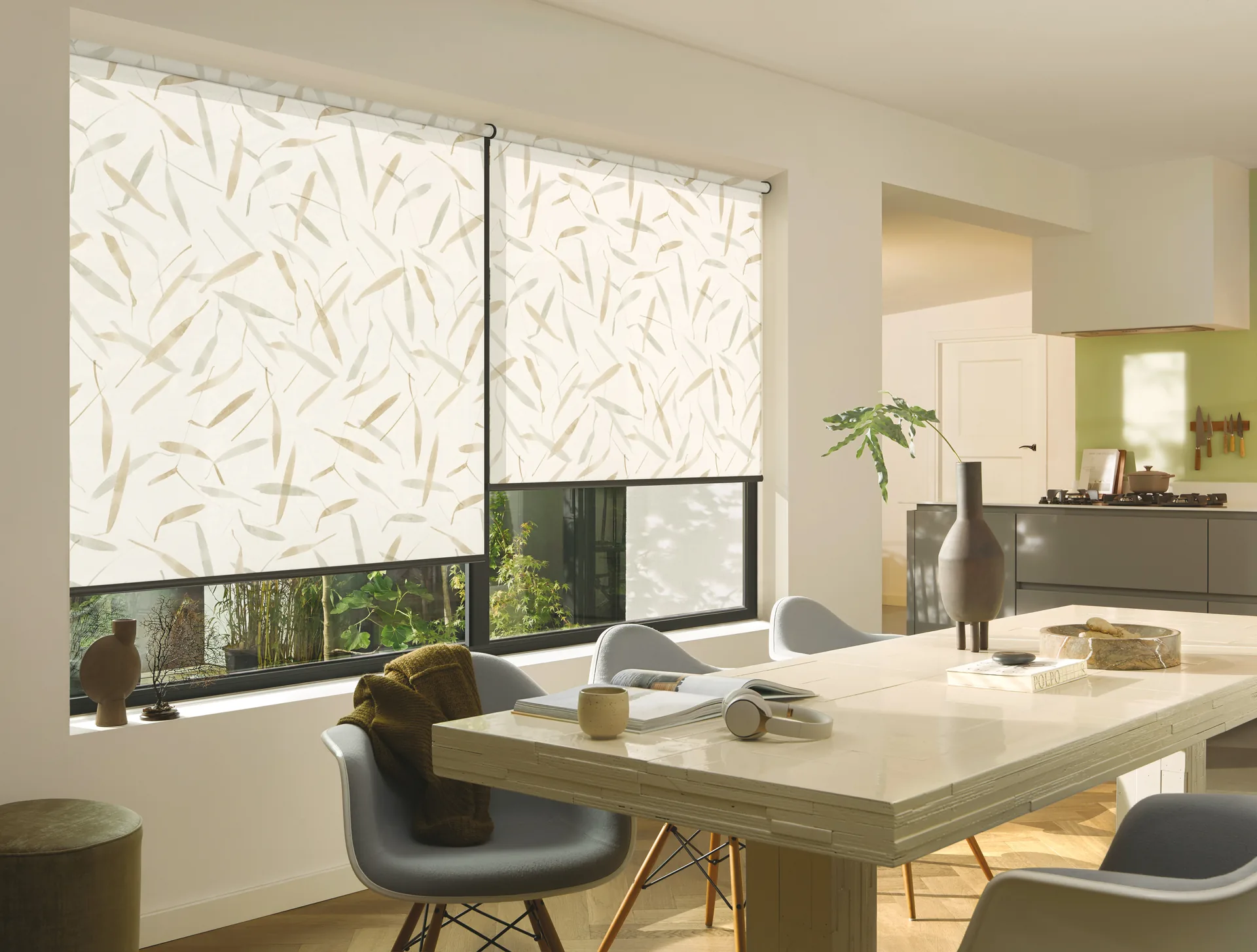
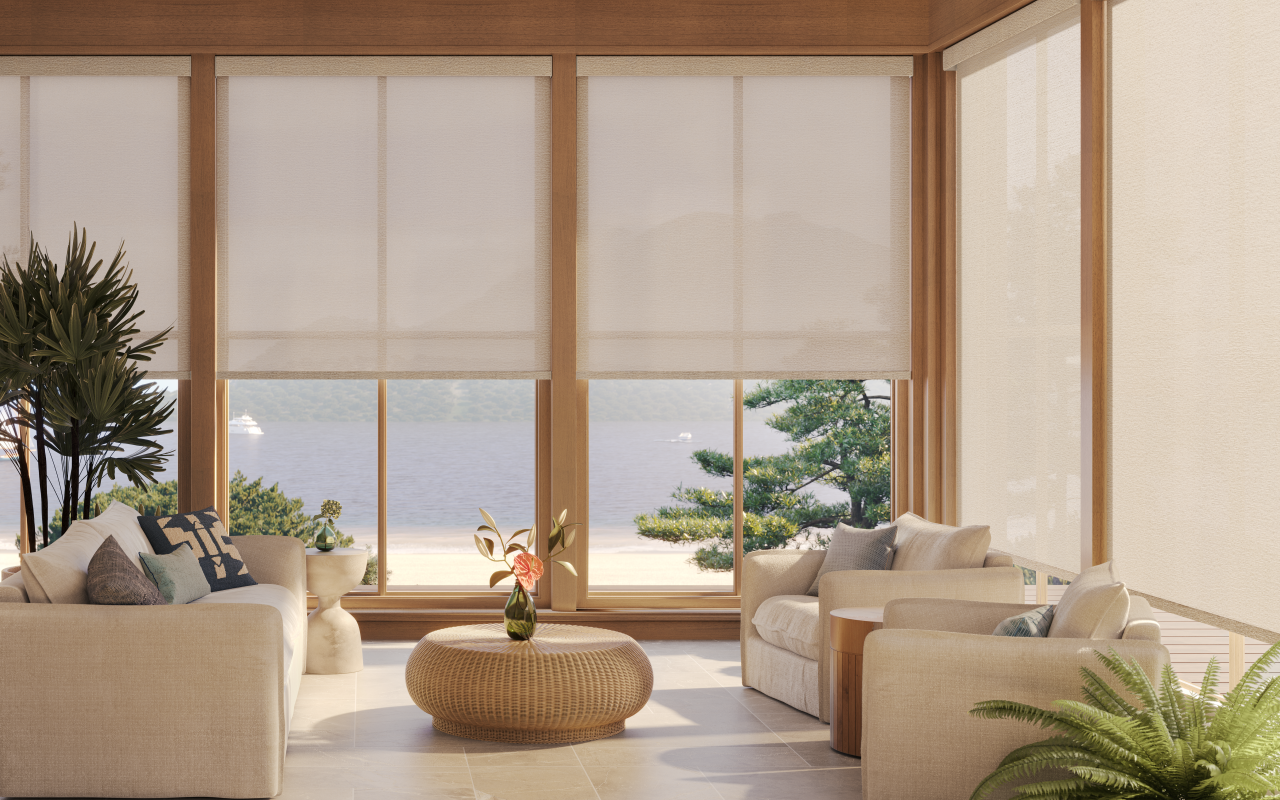
Solar shades
Solar shade fabrics for glare management and daylight control where views matter.
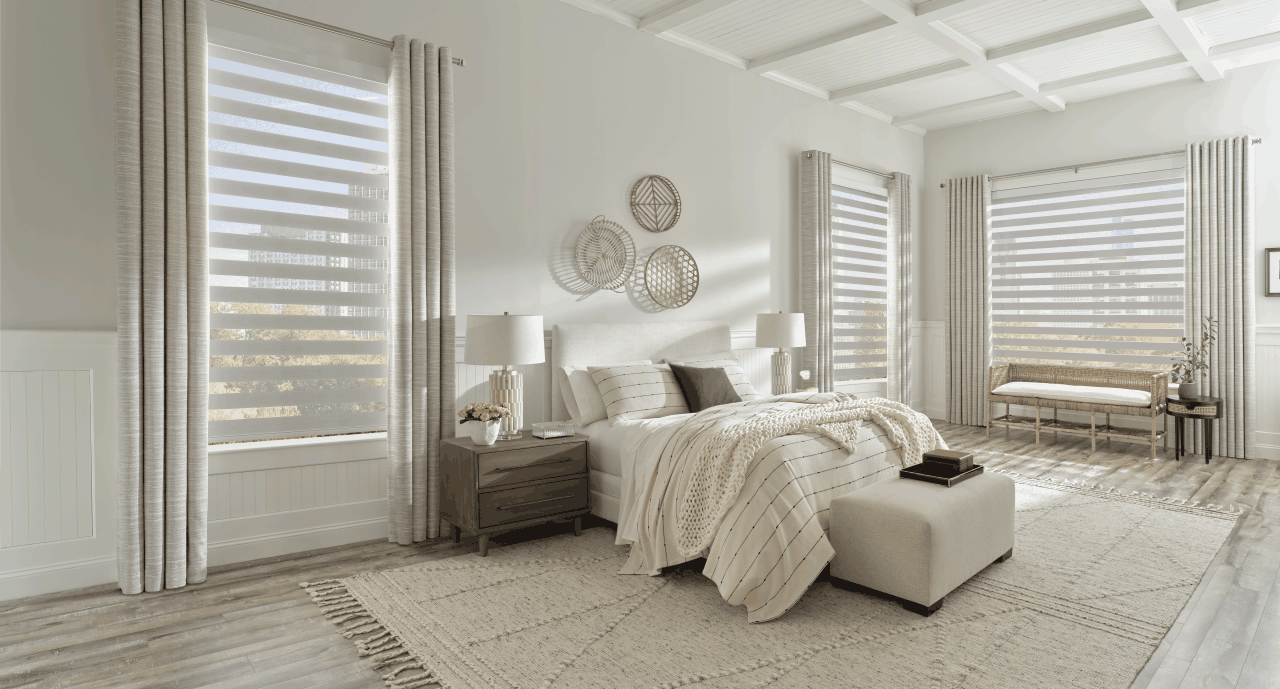
Banded shades
Alternating bands of sheer and solid fabric for flexible light and privacy control.
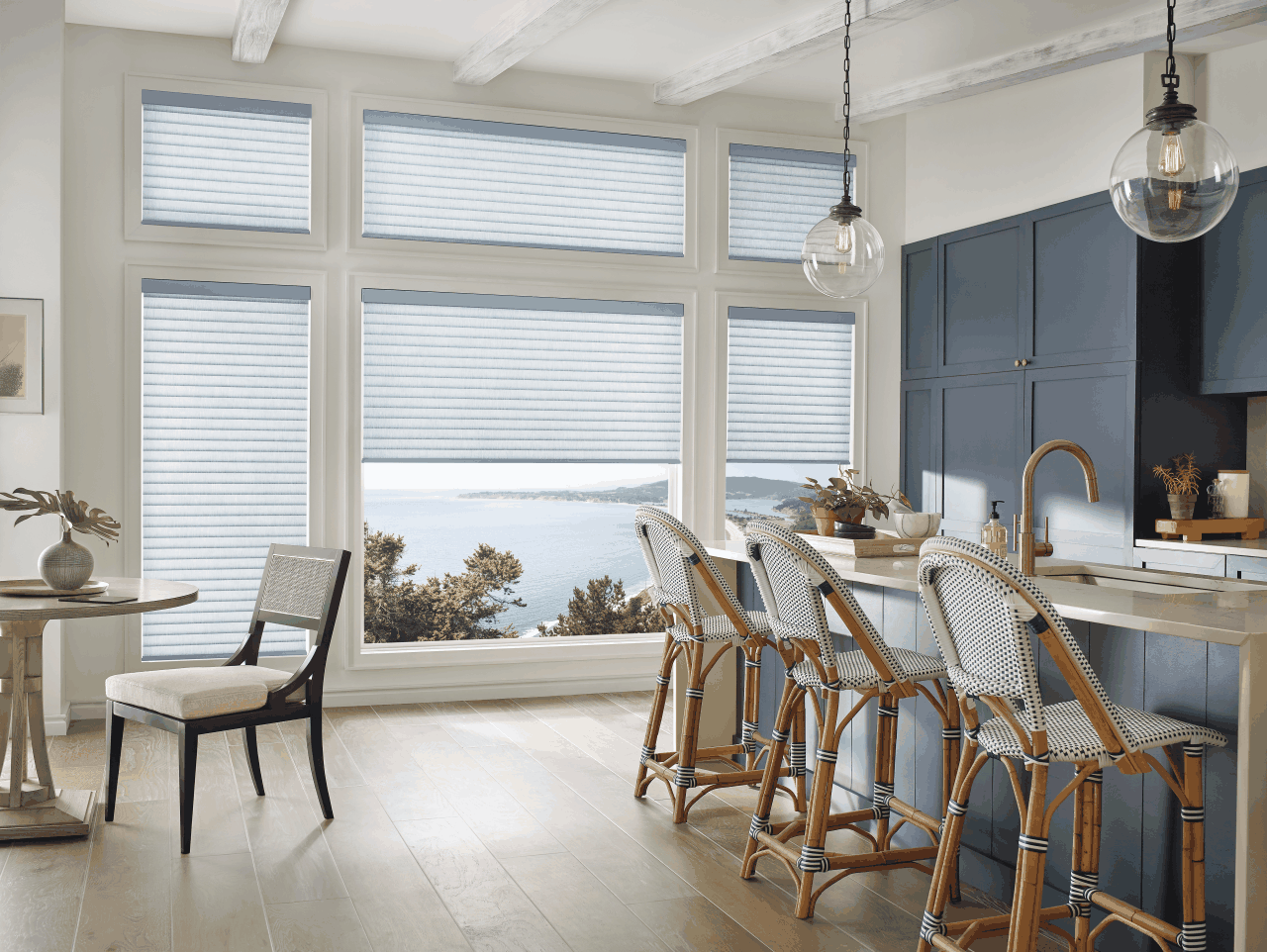
Cellular roller shades
A roller shade with curved cellular fabric that softly filters daylight.
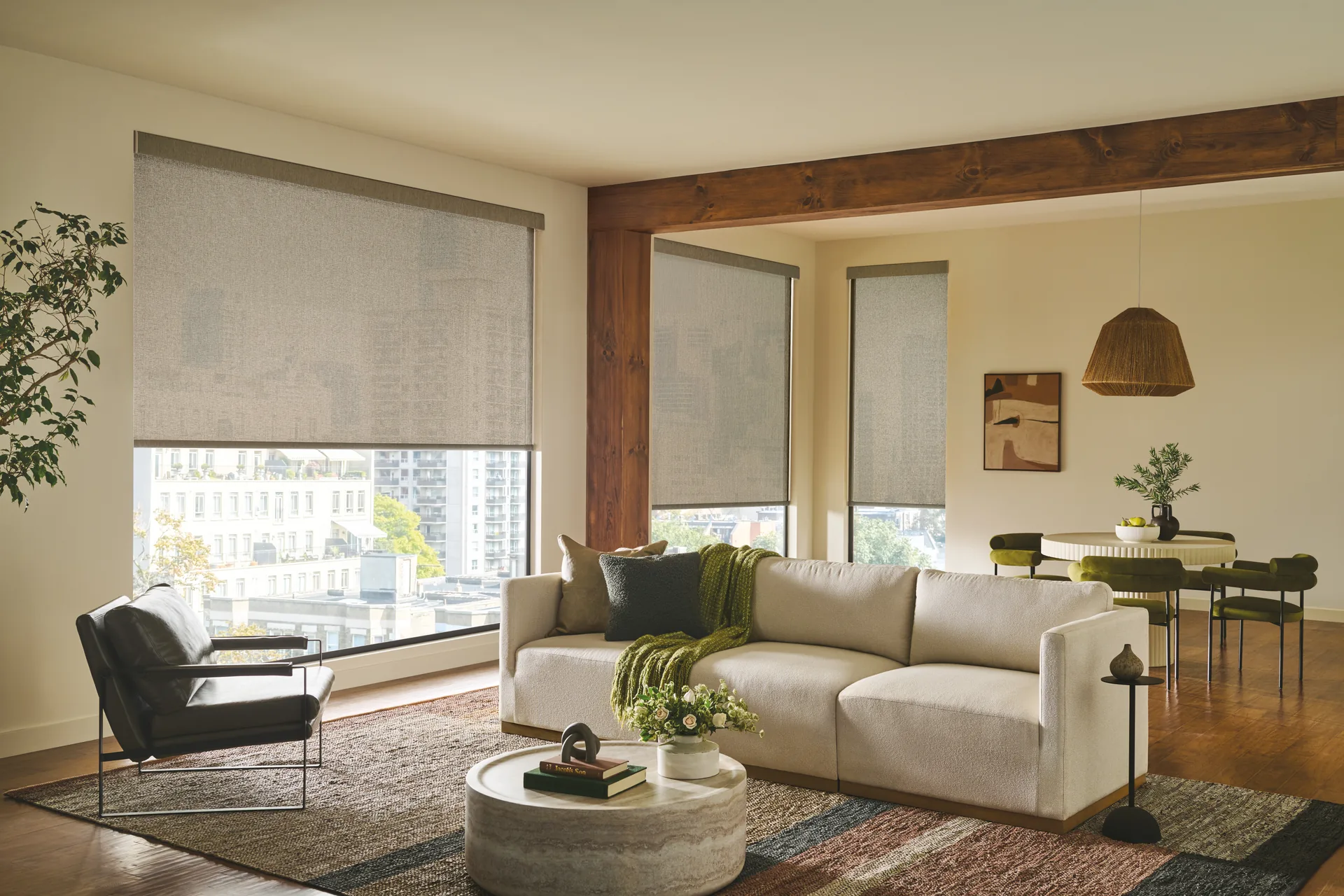
Architectural roller shades
Roller shades that emphasize fabric texture and the detail of the finished window.
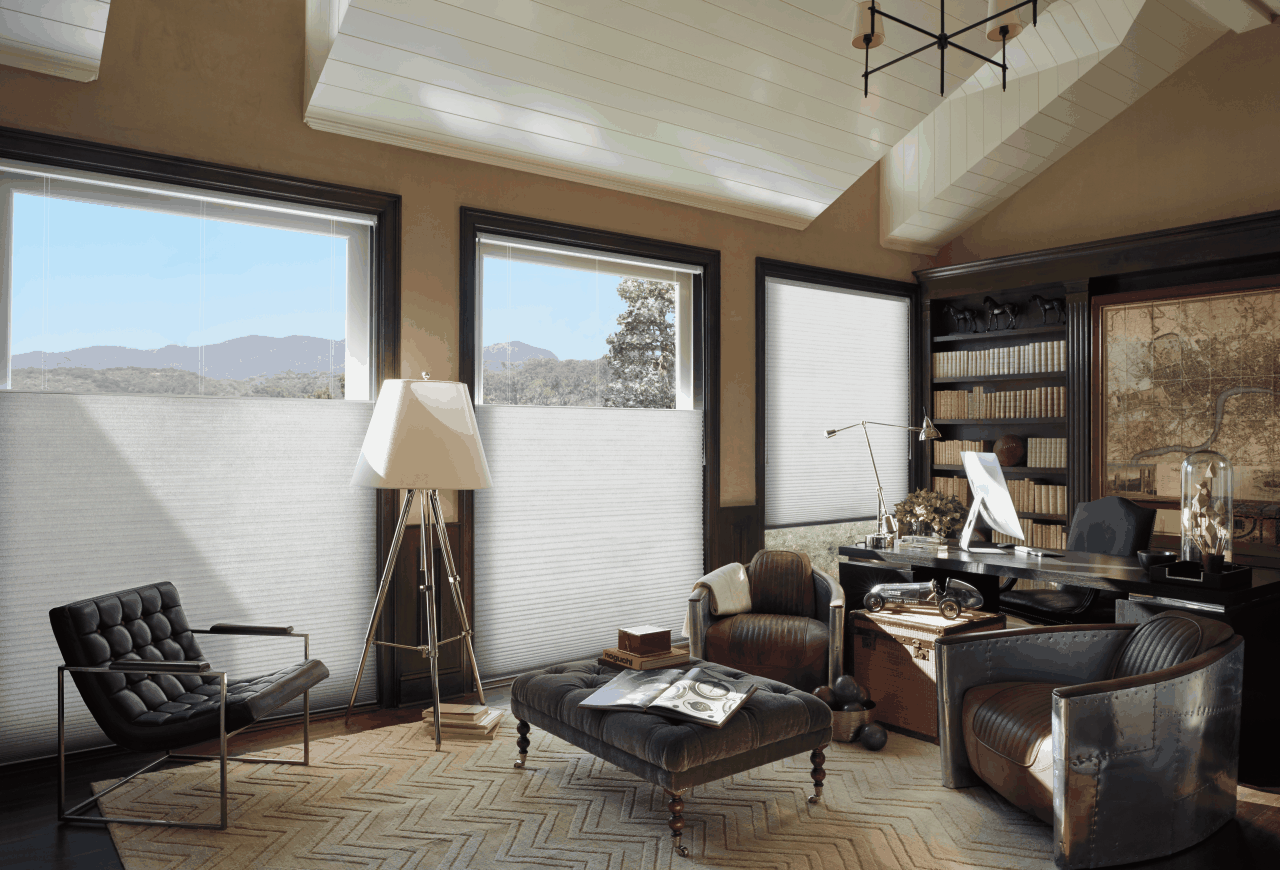
Cellular shades
Honeycomb shades with a cellular structure that adds insulation at the window.
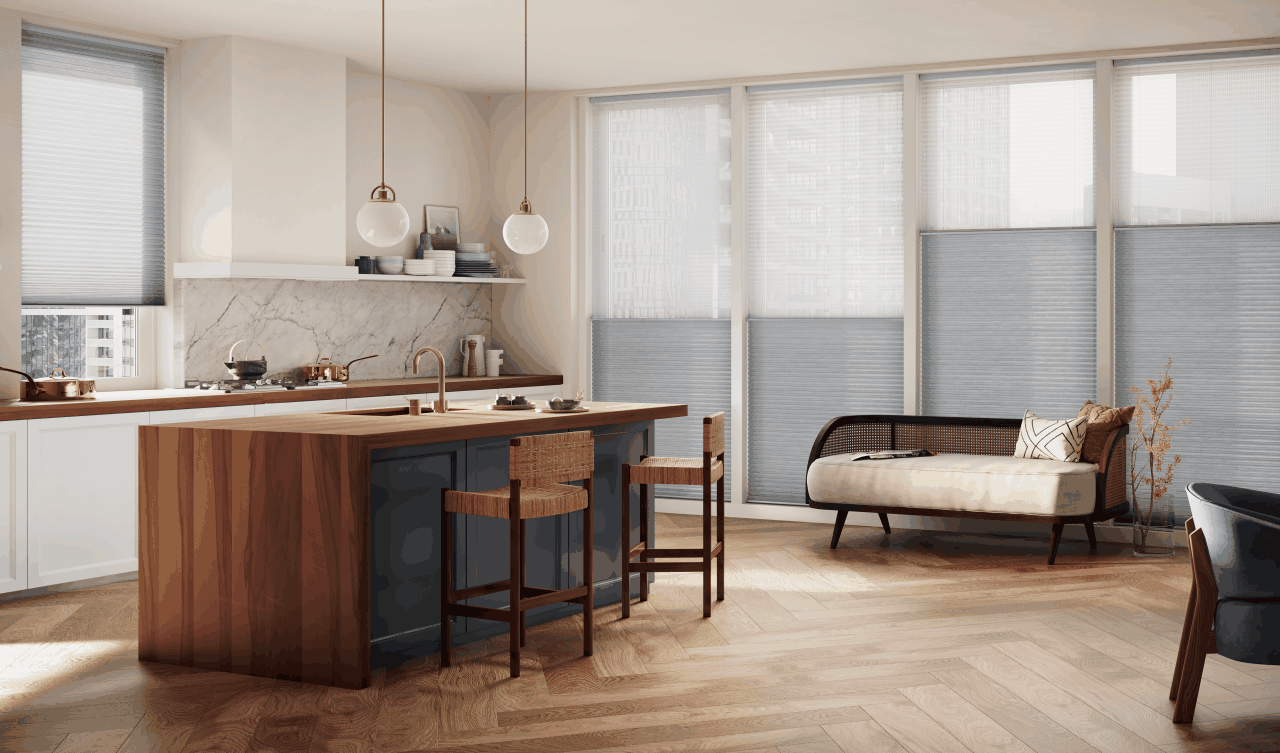
Cellular shades
Cellular shades with fabric choices for filtered daylight and privacy.
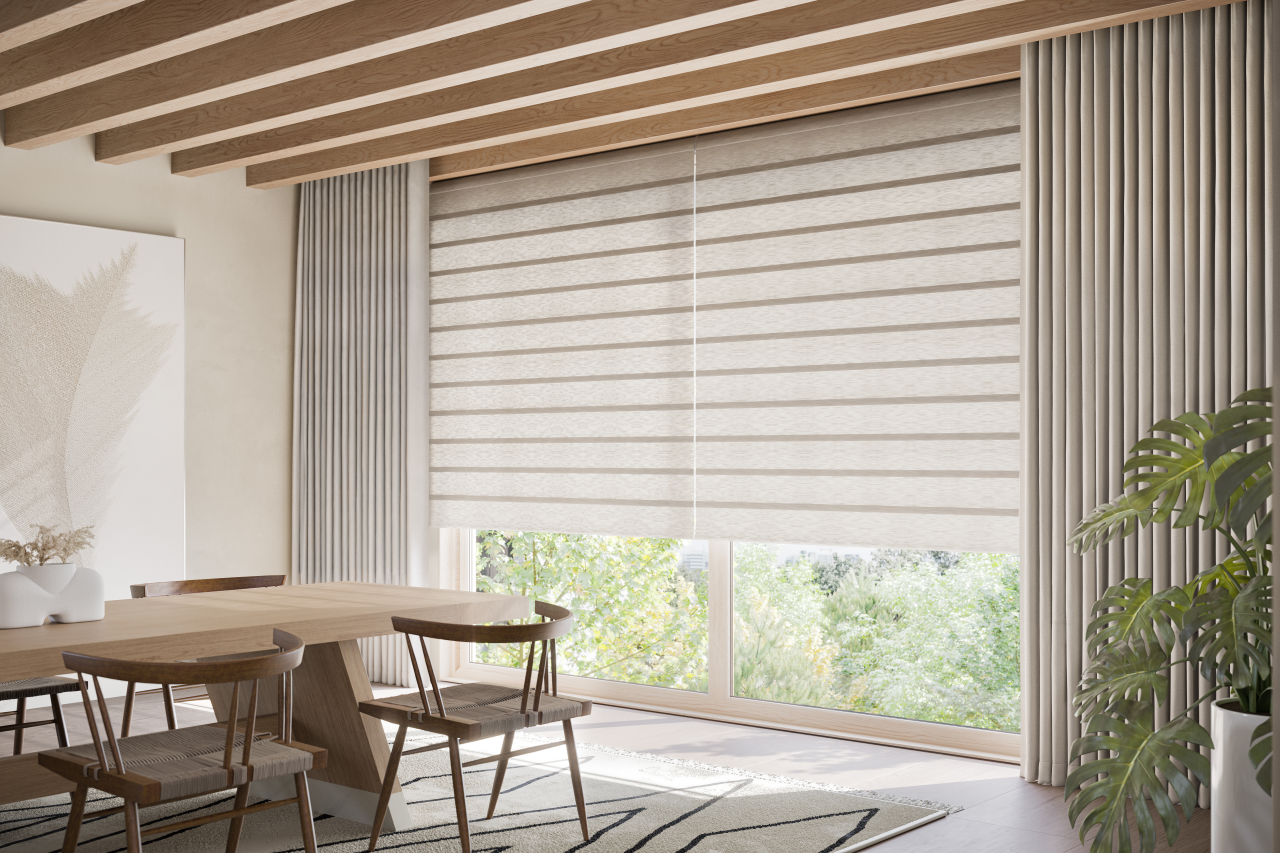
Modern Roman shades
Fabric Roman shades available in rolling and stacking styles, with folds you can compare in your room.
Roman shades
Fabric Roman shades with decorative trim and fabric choices to coordinate with your room.
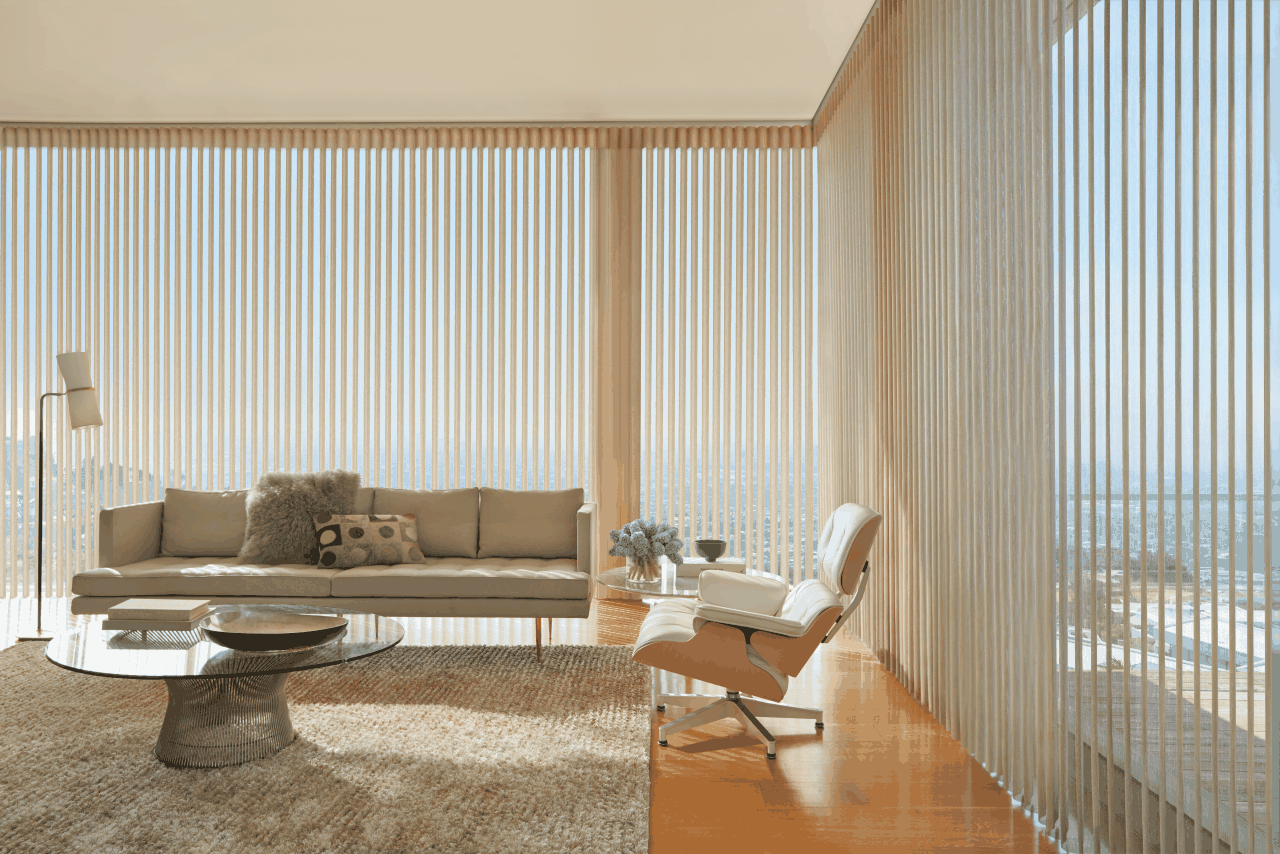
Vertical sheer shades
Light-diffusing vertical sheer panels with integrated vertical vanes.
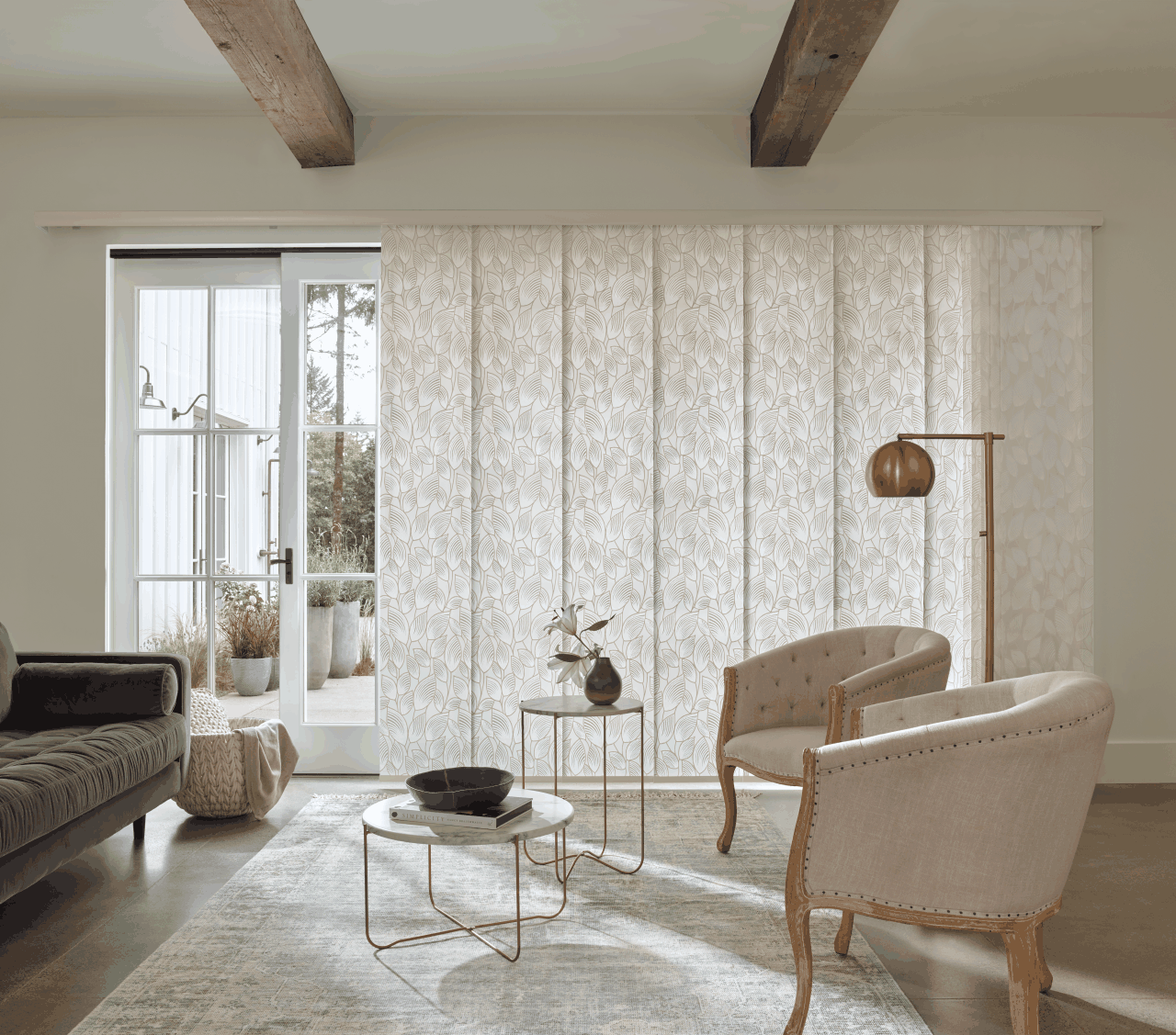
Panel-track shades
Wide fabric panels that slide along a track for patio doors and large windows.
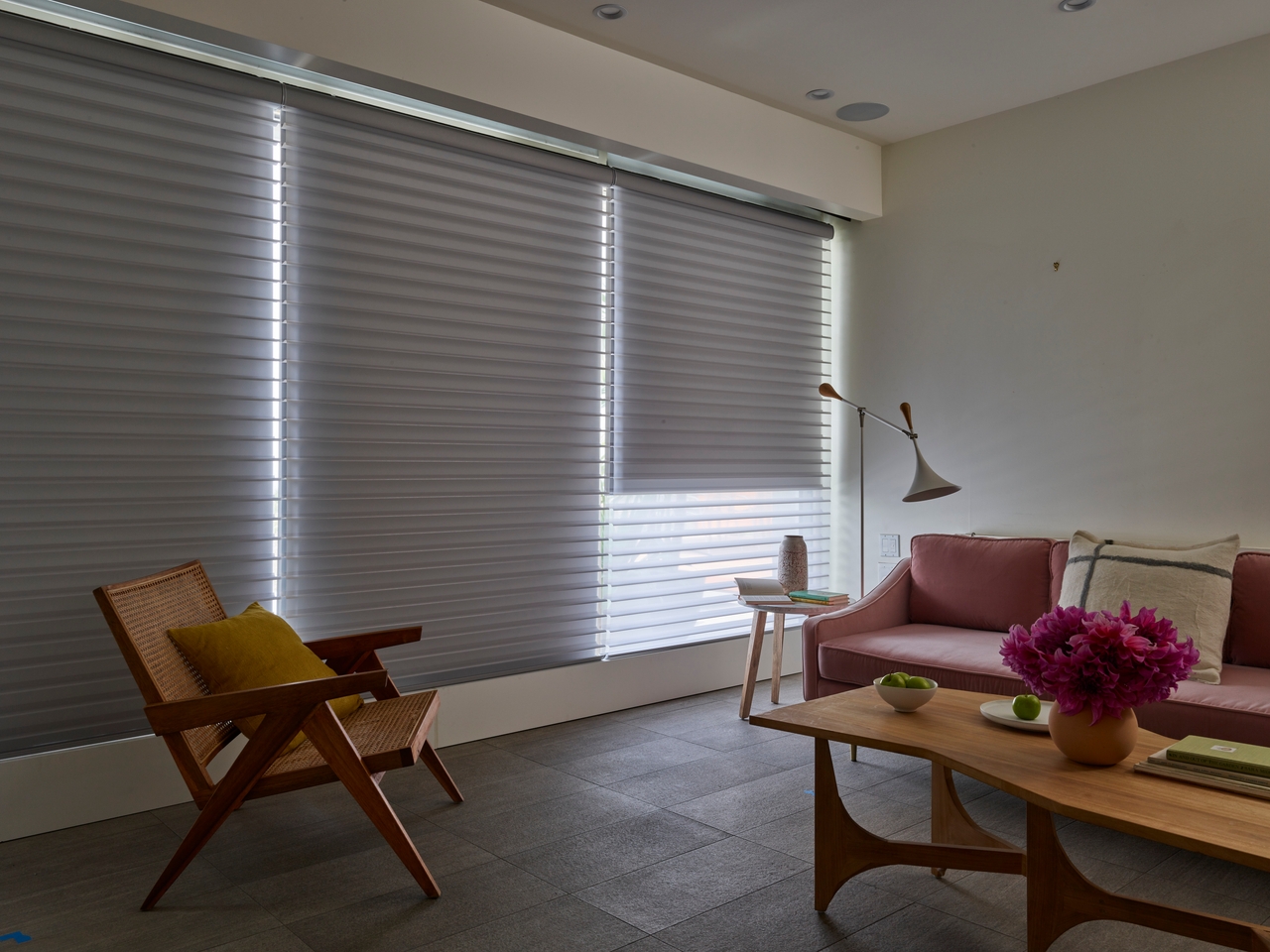
Sheer shades
S-shaped fabric vanes between sheer panels soften daylight and adjust the view.
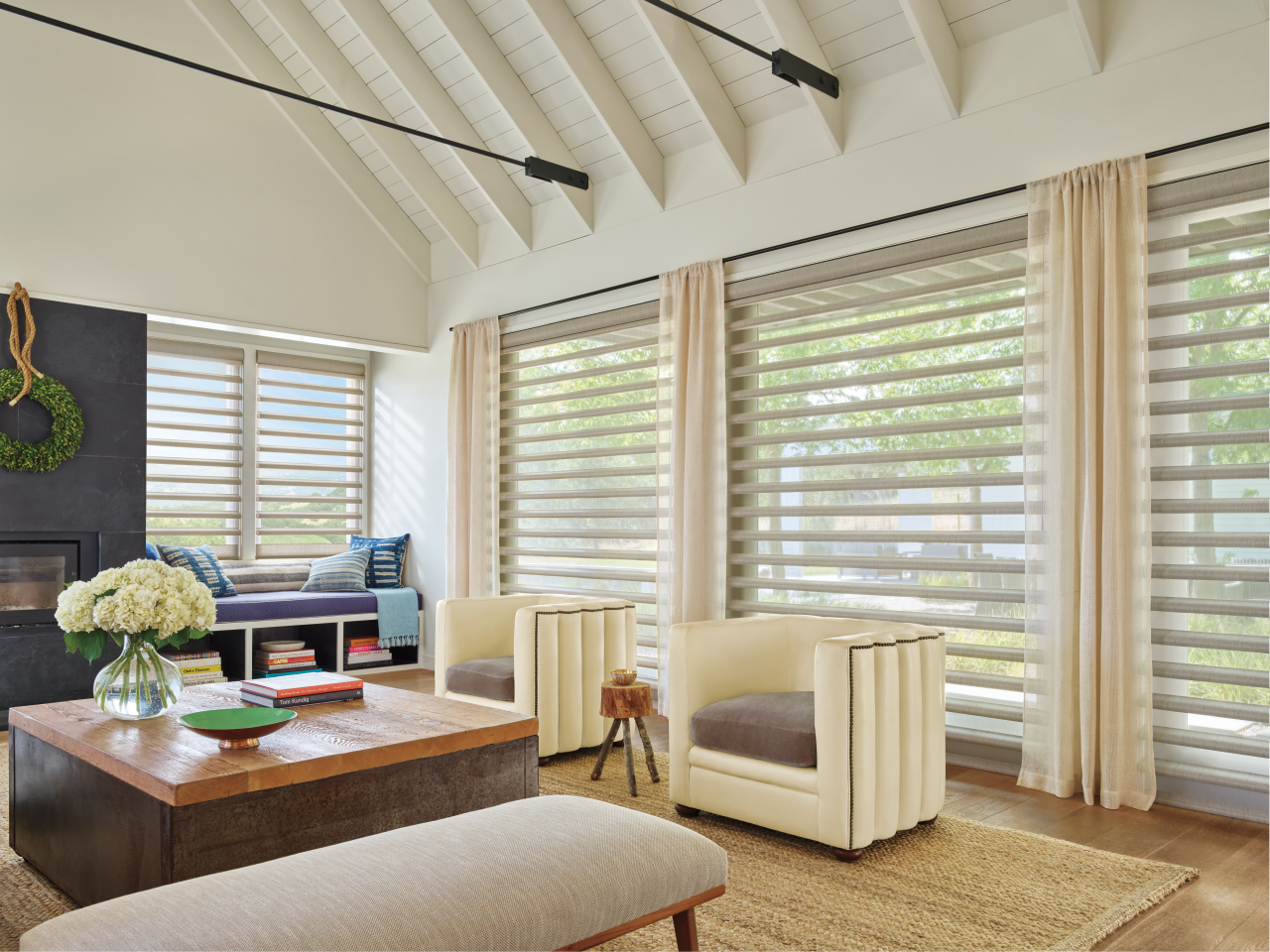
Sheer shades
Softly contoured fabric vanes with a light-diffusing back panel.
Each shade category creates a different balance of view, texture, light diffusion, privacy, and stack.
Roller shades offer a clean profile with fabric choices for different levels of light and privacy. Screen shades can help manage glare and strong daylight while preserving more of the view, but they may not provide nighttime privacy when the room is lit.
Cellular shades add an insulating layer at the window. Compare fabric opacity and construction alongside the look you prefer. Their effect on comfort and energy use depends on the window, installation, and how you use the shades; a particular savings amount is not guaranteed.
Roman shades bring soft folds or a cleaner rolling profile, depending on style. Woven materials add natural texture. Fold, stack, lining, material variation, privacy, and operating system should be reviewed with the actual sample.
Sheer and layered shades can soften daylight and provide adjustable view and privacy. Daytime privacy does not automatically continue at night, and room-darkening layers are available only in selected configurations.
Vertical sheers and gliding panels can suit patio doors, tall windows, and broad glass. Compare stacking space, track position, view when open, fabric opacity, and how the opening needs to function each day.
Opacity labels are a starting point, not a complete prediction of the finished room. Window direction, fabric color, interior lighting, mount, and edge gaps also affect the result.
For a bright room where the view matters, begin with screen or sheer options and compare them at the window. A more open material can preserve the view but may reduce privacy, especially after dark.
Decide whether privacy is needed during the day, at night, or both. Translucent and sheer fabrics can look private in daylight but reveal more when interior lights are on.
Room-darkening fabrics reduce incoming light. Some light can still enter around the sides, sill, and hardware, so tell us how dark you want the room to be. We can discuss mounting details or an additional layer where needed.
Operation should fit the window location, shade size, room routine, and maintenance access.
Manual systems vary by product and may include cordless, wand, loop, or other product-specific controls. Confirm reach, clearance, daily use, and current product availability.
Selected Hunter Douglas shade configurations may use PowerView® Automation for compatible app, remote, scene, or schedule features. Compatibility, power, controls, and supporting hardware vary by product and configuration. The PowerView® App is required for programmed operation.
For motorized shades, we’ll plan where the batteries or power supply will sit and how you’ll reach them. Charging, wiring, headrail clearance, and maintenance access depend on the chosen system.
We’ll measure the mounting depth and check trim, handles, and window movement. The roll direction, raised fabric stack, and headrail or cassette also affect how much glass stays clear. Samples help set expectations for fabric texture and variation, while professional installation brings those measurements together.
Screen, sheer, and selected layered shades are useful starting points. The best choice depends on openness, fabric color, sun direction, privacy needs, and how the room looks after dark.
Selected room-darkening fabrics and dual-layer configurations can reduce incoming light. The final result also depends on mount, hardware, and edge gaps, so discuss the desired darkness level during measurement.
No. Motorization and PowerView compatibility depend on the product, fabric, size, shape, operating system, and current configuration. Compatible choices should be confirmed before ordering.
A good place to start
Your in-home consultation
See shade fabrics beside your windows and compare how they filter light. We’ll help you choose the opacity, controls, and fit for each room.
(303) 449-4337Serving Boulder, Colorado and surrounding Front Range communities since 1976.
Schedule an in-home consultationQuick inquiry
Ask about shades.
Tell us which windows and products you would like to discuss.
Or call us at (303) 449-4337