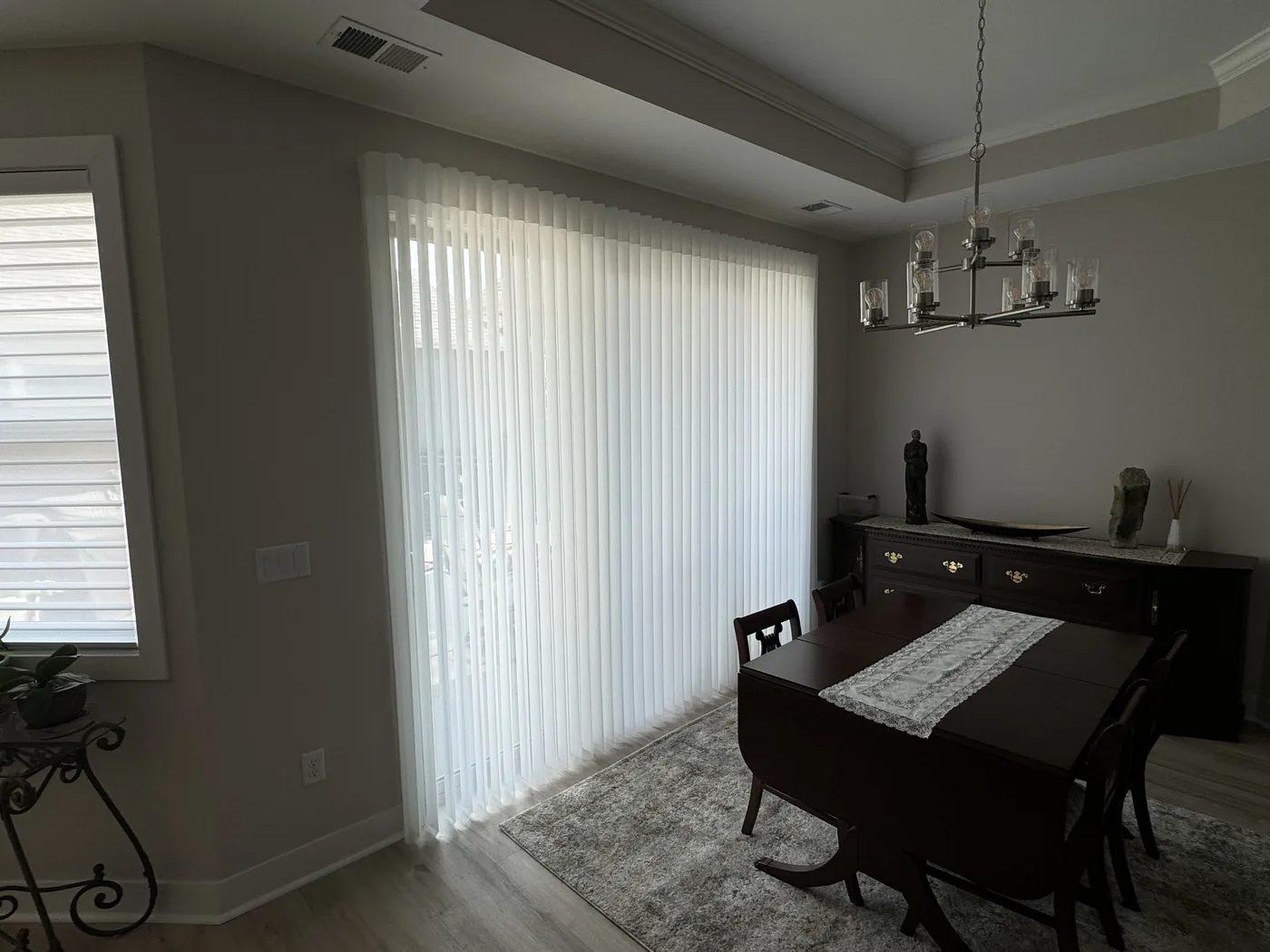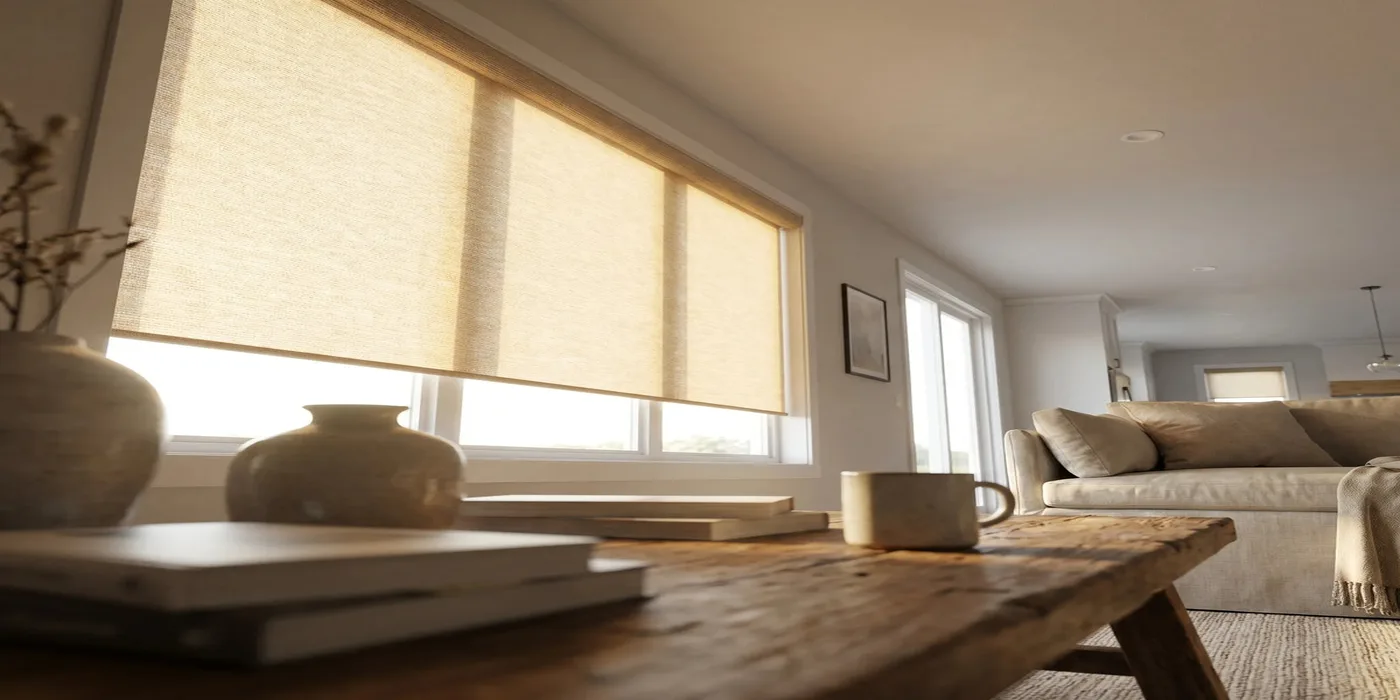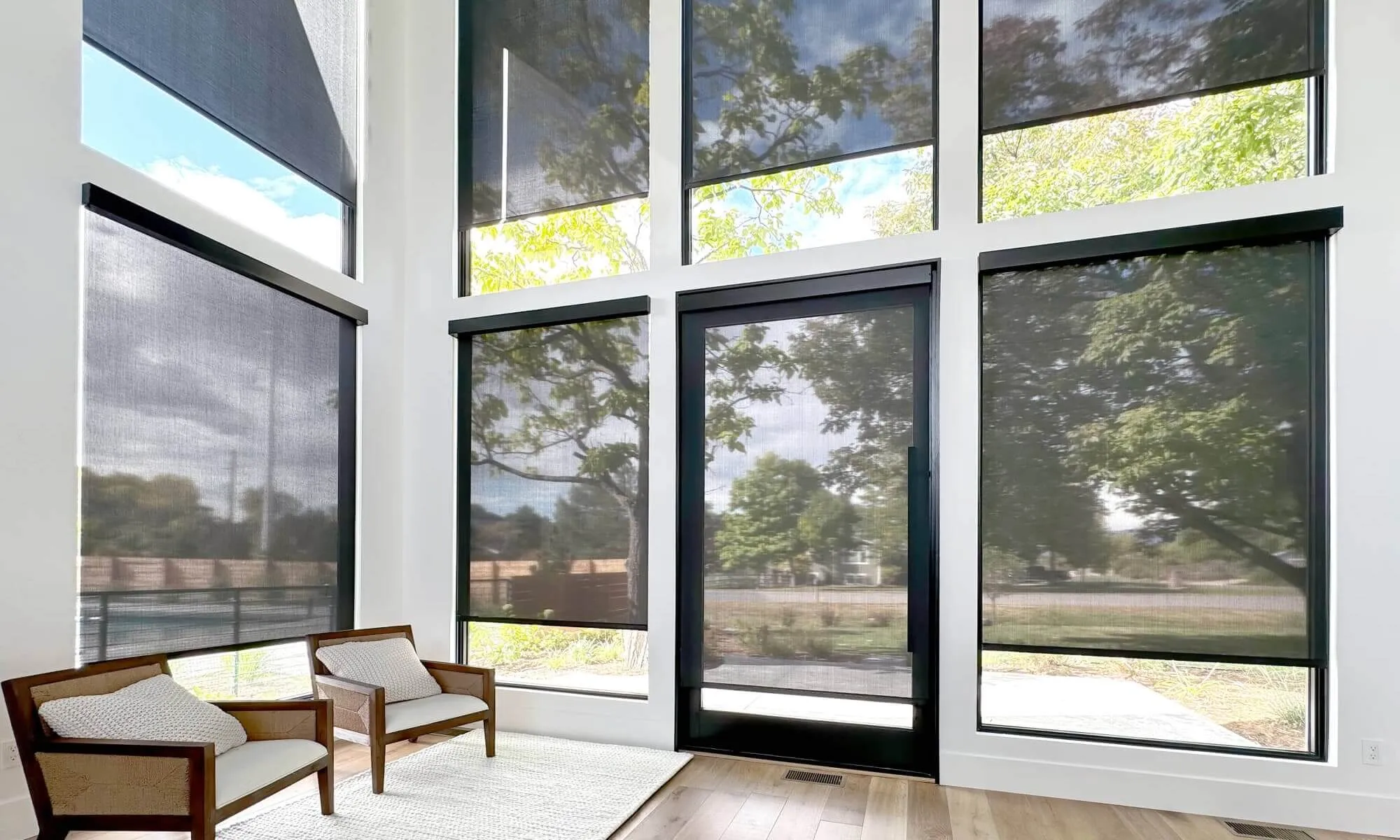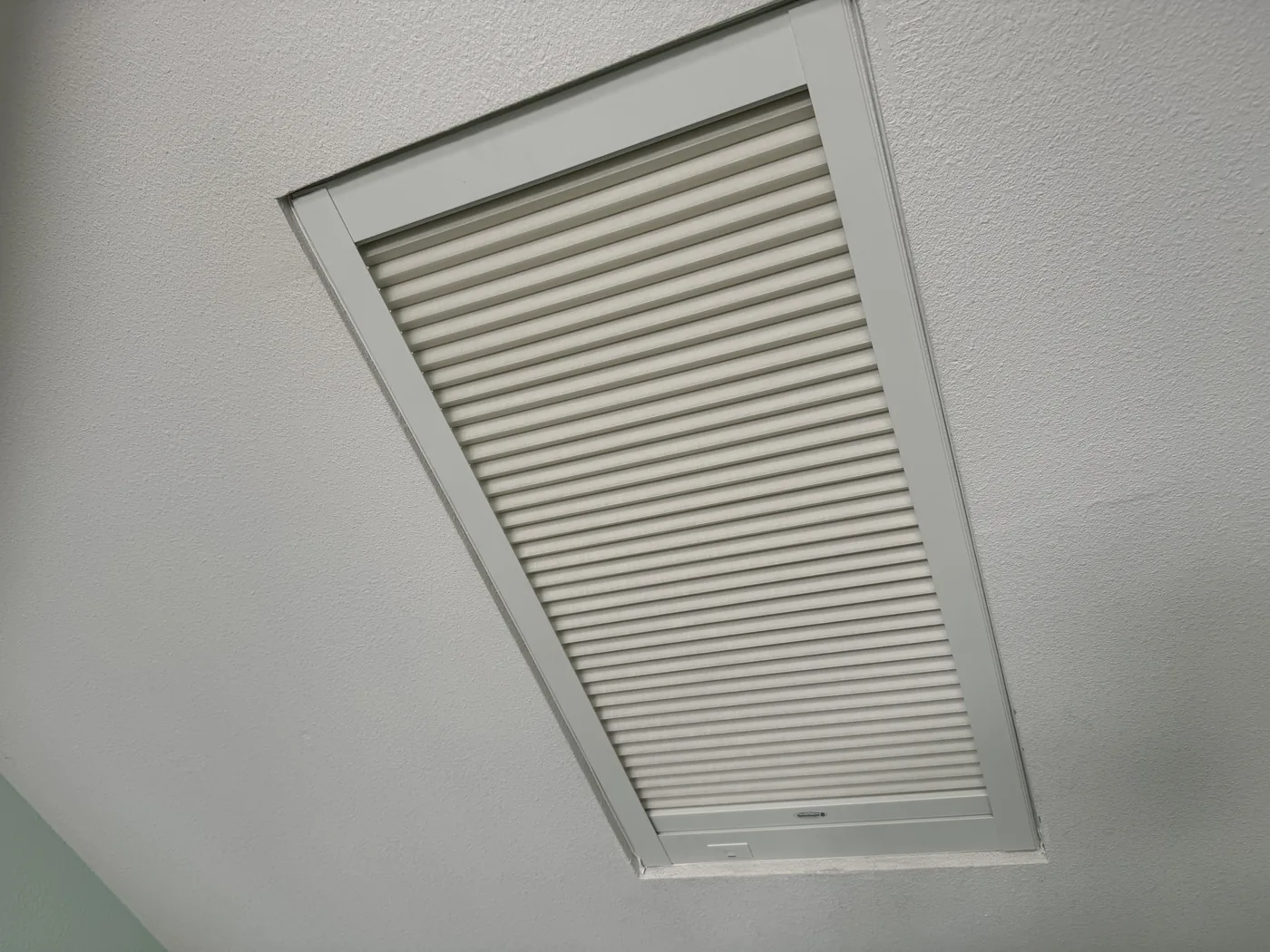
Blinds use adjustable slats or vanes to direct light. Shades cover the window with fabric or another continuous material that rolls, folds, stacks, or moves to one side. If you like changing the angle of daylight without lifting the treatment, start with blinds. If fabric, texture, or a particular level of light filtering matters most, compare shades.
Neither category is automatically better. The right choice depends on what the room needs during the day and after dark, how much view you want to keep, the window's exposure, and how often the treatment will be adjusted.
What is the difference between blinds and shades?
Blinds control light with slats or vertical vanes. Tilting them changes the angle of incoming light and the view into or out of the room. Raising a horizontal blind can clear the glass more fully, but the stacked blind occupies space at the top. Wood, alternative wood, metal, fabric, and vertical products create very different looks and should not be treated as interchangeable.
Shades manage the window with a continuous surface. Roller, screen, cellular, Roman, woven, sheer, and layered shades each handle daylight differently. A screen fabric may preserve more of the outdoor view while helping manage glare, but it may provide limited privacy at night when the room is lit. A more opaque fabric may support greater privacy and light reduction, although the final result also depends on edge gaps, mounting, hardware, and installation.
Start with Howard's Draperies' overview of window treatment products, then compare the separate blind and shade categories.
Choose by the kind of light control you need
For changing daylight, ask whether you want to redirect light or cover the glass with a selected fabric. Slats can be tilted as the sun moves, which can be useful in an office, kitchen, or living room where glare changes during the day. The tradeoff is that slats create horizontal or vertical lines and require enough clearance to operate without contacting trim or hardware.
Shades offer a wide choice of textures and light levels. A light-filtering roller or cellular shade softens bright sunlight. A screen shade can reduce glare while retaining some view. A room-darkening fabric blocks more light through the material, though light may still enter around its edges. The mount and any additional light-control features affect how dark the room becomes.
In bright Boulder, Colorado rooms, compare actual samples at the window. Fabric color, weave, glass, exposure, and interior lighting can change how a sample looks from morning to evening.
Choose by privacy needs and room use
Privacy is not a single setting. A treatment that works well during the day may behave differently after dark. Blinds can limit sightlines when the slats are closed or angled, but light gaps remain part of the design. Sheer and screen shades may support daytime privacy in selected conditions, yet interior lighting can make the room more visible from outside at night.
Bedrooms often call for greater light reduction and nighttime privacy. Living rooms may prioritize softened daylight and a view. Kitchens and baths require attention to humidity, cleaning, and proximity to water. Real wood brings warmth, but a documented alternative wood product may be a more suitable comparison in a humid room. That does not make it waterproof or appropriate for direct water exposure.
For a flexible middle ground, layered or banded shades can alternate sheer and solid areas. Their light and privacy behavior still depends on alignment, fabric, room lighting, and the selected configuration.
Compare fit, appearance, and everyday operation
A good decision also accounts for mounting depth, trim, cranks, handles, and how much the treatment stacks when open. A shallow window may not accept the same inside mount as a deeper opening. A wide window may need a different product or multiple coordinated units. Doors and frequently used openings need clearance for movement and hardware.
Think about appearance at three moments: fully open, partly adjusted, and fully closed. Blinds retain visible slats even when lowered. Roller shades can have a minimal profile. Roman and woven shades add texture and a more decorative presence. Cellular shades create a pleated surface and stack at the top.
Operation matters too. Manual systems vary by product, and selected configurations may offer motorized control. Choose the treatment first for the room's light, privacy, fit, and design needs, then confirm which controls are available for that exact configuration.
Frequently asked questions about blinds vs shades
Are blinds or shades better for privacy?
Either can support privacy when selected for the room. Blinds use slat or vane angle, while shades rely more on fabric opacity and coverage. Nighttime privacy must be evaluated with the interior lights on, especially for sheer and screen materials.
Are shades better than blinds for bedrooms?
Shades often provide more fabric and opacity choices, including room-darkening options. Blinds can also work when adjustable slat control is preferred. Final light reduction depends on the product, fabric, mount, hardware, edge gaps, and installation.
Which is easier to maintain, blinds or shades?
Maintenance depends on the material and product. Slats may require individual dusting. Shade care can range from light vacuuming to product-specific professional cleaning. Follow the current care instructions for the exact material rather than applying one method to every treatment.
Next step
Compare blinds and shades in your home
See the materials beside your windows before deciding. Howard's Draperies provides in-home consultations in Boulder, Colorado and nearby Front Range communities. We’ll help you compare blinds and shades, measure the openings, and plan professional installation.
Request an in-home consultation