Treatments that move sideways often work well on sliding glass doors because they can follow the door’s opening direction. Vertical blinds, gliding panels, vertical sheers, and selected vertical shades are worth comparing. The right choice leaves a clear walkway and fits the space available for the treatment to stack.
A slider is not simply an extra-wide window. It is a moving doorway, so the treatment must work around the handle, frame, threshold, furniture, and the side used for entry.
Compare treatment styles for sliding glass doors
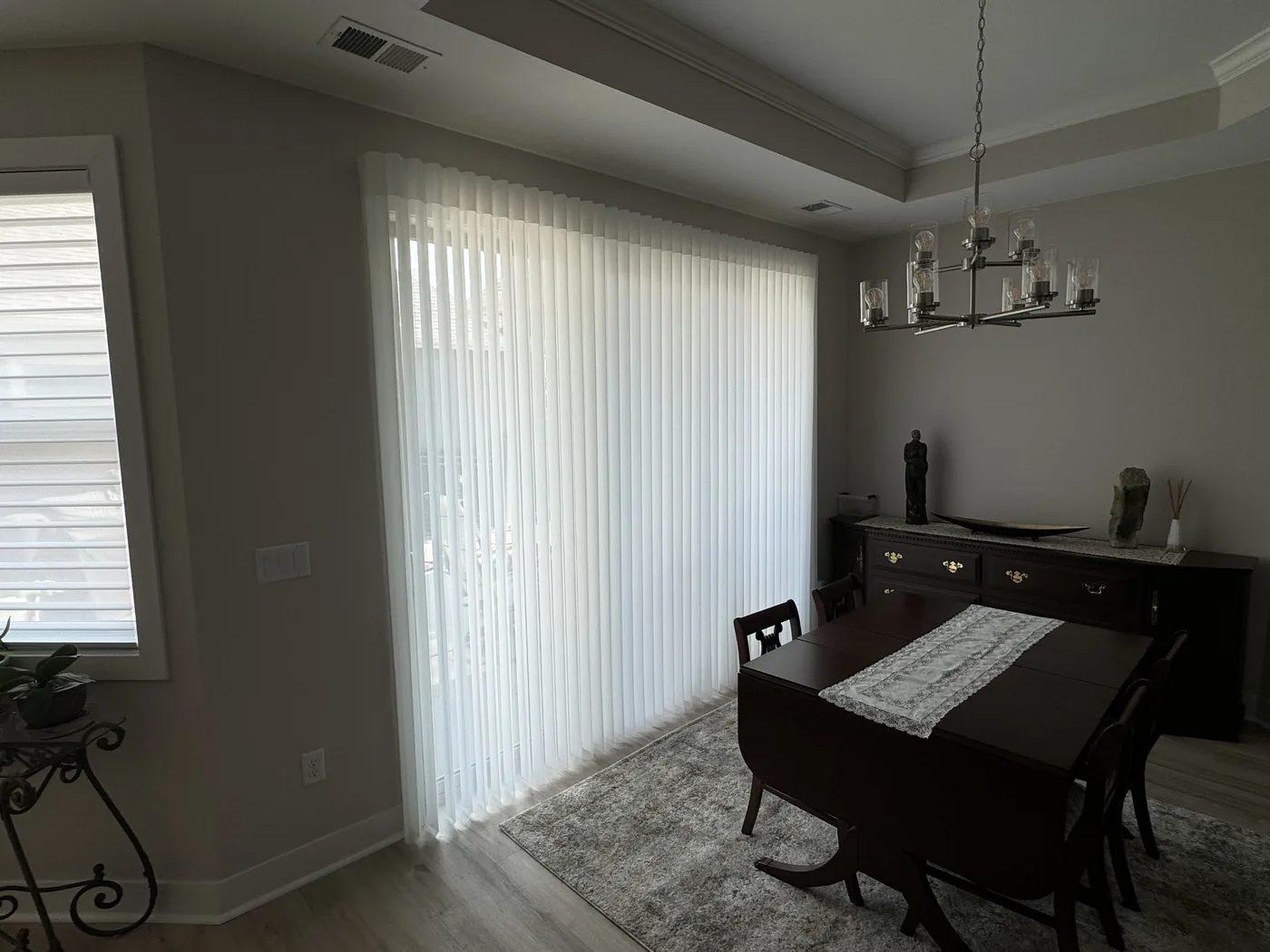
Vertical blinds are a practical choice because their vanes rotate for adjustable light and draw to the side for access. Material, vane shape, stack size, and operating system affect both appearance and daily use. Hunter Douglas Somner® Vertical Blinds and Hunter Douglas Vertical Solutions® Vertical Blinds are distinct product lines, so current materials and configuration details should be compared separately.
Hunter Douglas Skyline® Gliding Window Panels use broad fabric panels that travel on a track and stack together when open. They can suit modern rooms and wide glass. Compare the larger panels with narrower vertical vanes to decide which scale works best in the adjoining room.
Hunter Douglas Luminette® Privacy Sheers combine soft vertical fabric with integrated vanes. They can diffuse daylight and provide adjustable light and privacy control. Their softer appearance may coordinate well with nearby fabric treatments, while fabric selection and after-dark privacy still require review in the room.
Explore the full range of Hunter Douglas blinds before narrowing the choice by movement and material.
Plan the opening direction and stack space
Start by identifying which panel moves and where the treatment can stack. A center-opening treatment may look balanced on a symmetrical wall, while a one-way draw can keep the primary passage clearer. The available wall area beside the door matters because every vertical treatment occupies some space when open.
Ask how much glass you want exposed. A compact stack preserves more of the outdoor view, but panel width, vane count, fabric, and track configuration all influence the result. If a treatment stacks over the fixed glass instead of beyond the frame, it may reduce the clear view even when fully open.
Furniture placement also matters. A sofa, dining chair, floor vent, or doorstop can interfere with moving panels. Plan the complete travel path before choosing a treatment based only on a fabric sample.
Balance glare, views, and privacy
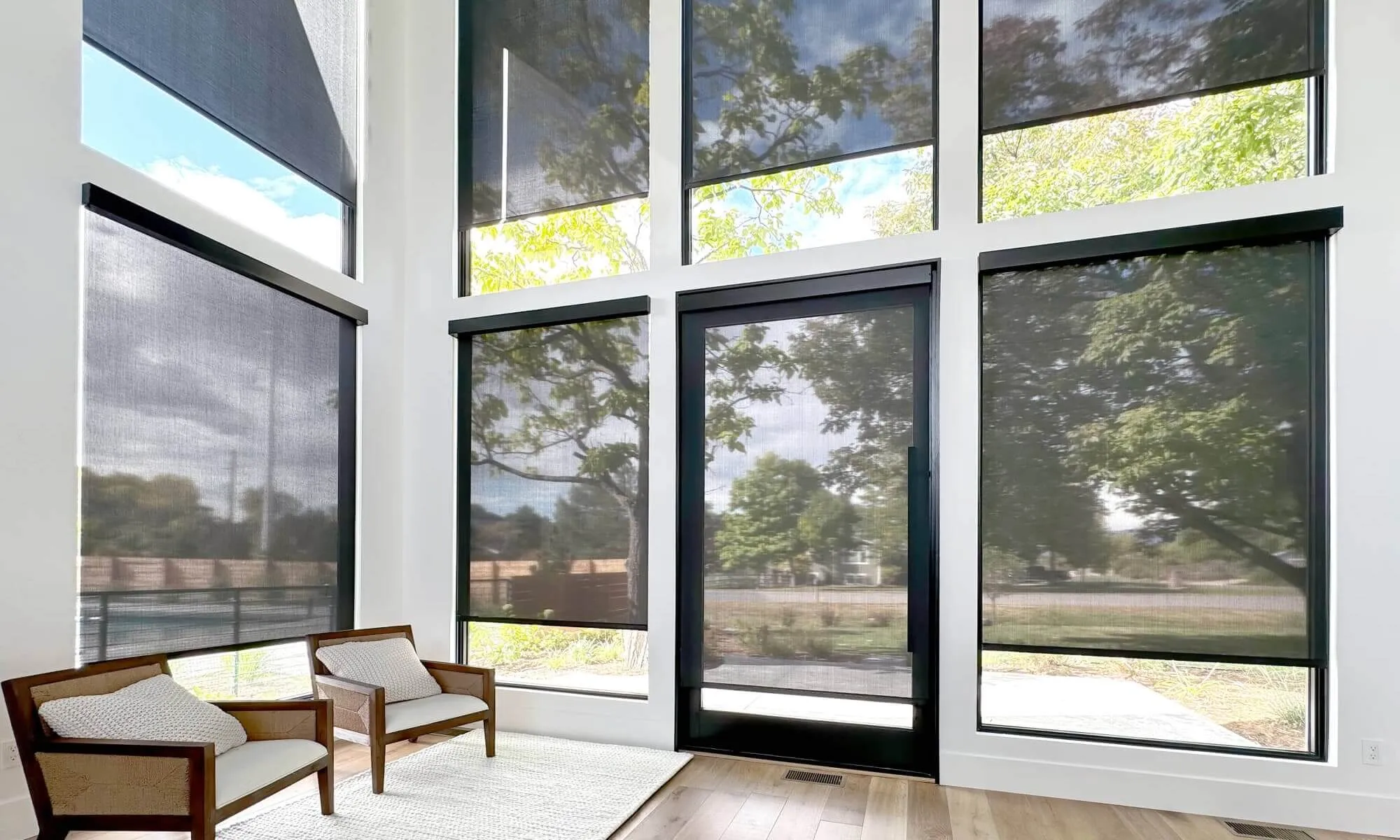
Sliding doors often bring in valuable daylight and a strong outdoor connection. A more open or sheer material may soften glare while preserving the view, but it may offer limited privacy after dark. A more opaque vane, panel, or fabric may support stronger privacy and light reduction at the cost of view-through.
For Boulder, Colorado homes with bright exposures, evaluate the room at the time when glare is most noticeable. Fabric color, weave, glass, direction, and interior lighting all affect performance. No openness level or opacity label should be treated as a universal result.
If the slider is in a bedroom or media room, ask how much light reduction is realistic around the track, floor, side edges, and moving panels. Room-darkening materials can reduce light, but standard vertical systems are not automatically blackout systems.
Measure for handles, thresholds, and daily use
Accurate measuring protects both access and appearance. The plan should account for the door handle, frame projection, baseboards, floor level, track location, and the distance between the moving treatment and the glass. A treatment that clears the handle when closed must also clear it while traveling.
Think about who uses the door and how often. A busy patio door needs a clear passage and an easy way to draw the treatment aside. If pets use the opening, discuss the likely contact with the fabric and choose a layout that keeps the stack out of their path.
Selected products may offer motorized movement, but availability depends on the exact treatment, size, configuration, power, controls, and installation conditions. Manual operation may remain the simpler choice for an easily reached door. Professional window treatment installation helps align the measured track, clearances, panel travel, and final stack with the plan.
Frequently asked questions about sliding door treatments
Are vertical blinds still a good choice for sliding glass doors?
Yes. They remain practical because the vanes tilt for adjustable light and draw in the same direction as the door. Their suitability depends on material, stack size, track, room style, traffic, and the selected operating system.
Can roller shades be used on sliding glass doors?
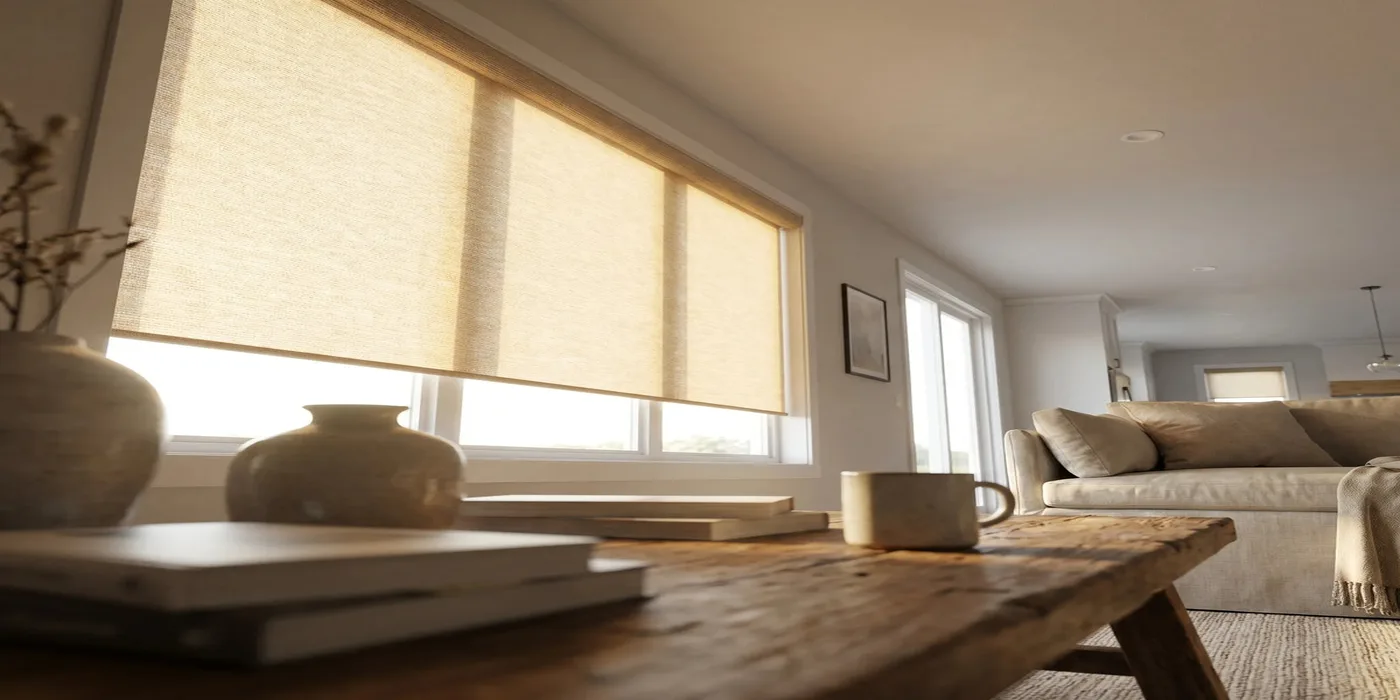
Selected roller shade configurations may cover wide glass, sometimes as multiple coordinated shades. The tradeoffs include seams, separate controls, edge gaps, and access to the moving door. A product-specific measurement is needed before choosing this route.
What provides the most privacy on a patio door?
Privacy depends on material opacity, panel or vane overlap, edge gaps, room lighting, and whether the treatment is fully closed. More opaque materials generally limit view-through more than sheer or screen fabrics, especially after dark.
Next step
Find the right treatment for your sliding door
The best window treatments for sliding glass doors are planned around the doorway, not selected from appearance alone. Howard's Draperies can measure the opening, review traffic and stack space, and compare vertical blinds, gliding panels, sheers, and suitable shade options for Boulder and nearby Front Range homes.
Request an in-home consultation