Large windows need treatments that manage light and remain easy to use across a wide opening. Gliding panels, vertical sheers, roller or screen shades, and groups of coordinated shades are useful options. Compare where each treatment stacks, how much view remains, and whether you want to adjust the whole window or separate sections.
A large opening magnifies small planning errors. Uneven headrails, poorly placed seams, bulky stacks, and inaccessible controls are more noticeable across a glass wall, so measurement and layout should come before fabric color.
Match the treatment to the scale of the glass
Hunter Douglas Skyline® Gliding Window Panels use broad fabric panels that move sideways and stack together when open. They suit wide or tall glass, with panel divisions that remain visible across the window when closed.
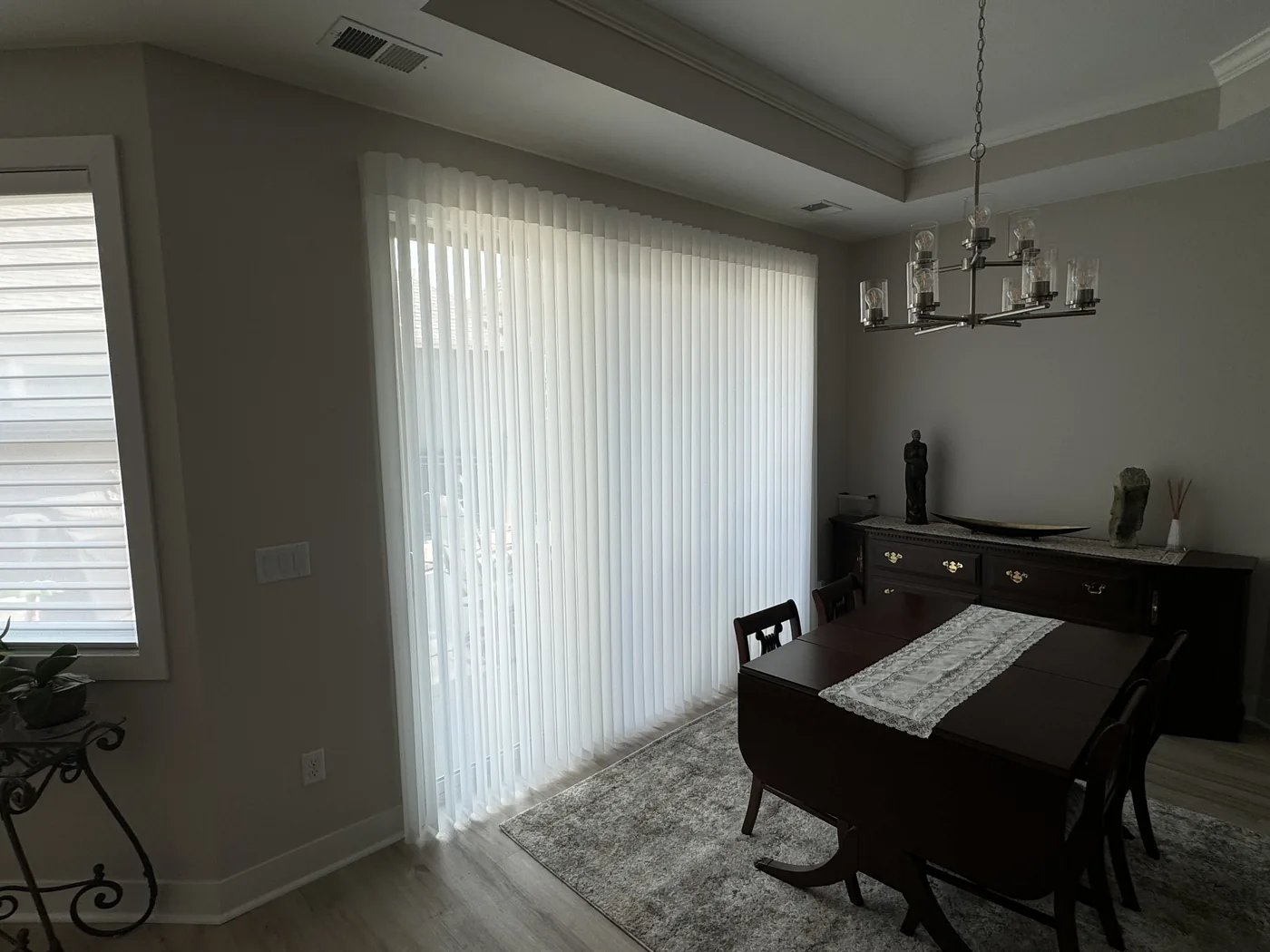
Vertical sheer treatments offer a softer alternative. Hunter Douglas Luminette® Privacy Sheers use vertical fabric and integrated vanes for adjustable light and privacy control. They can suit living and dining spaces where the goal is to soften the glass rather than create a crisp panel wall. Fabric movement, stack, privacy after dark, and floor clearance should all be reviewed.
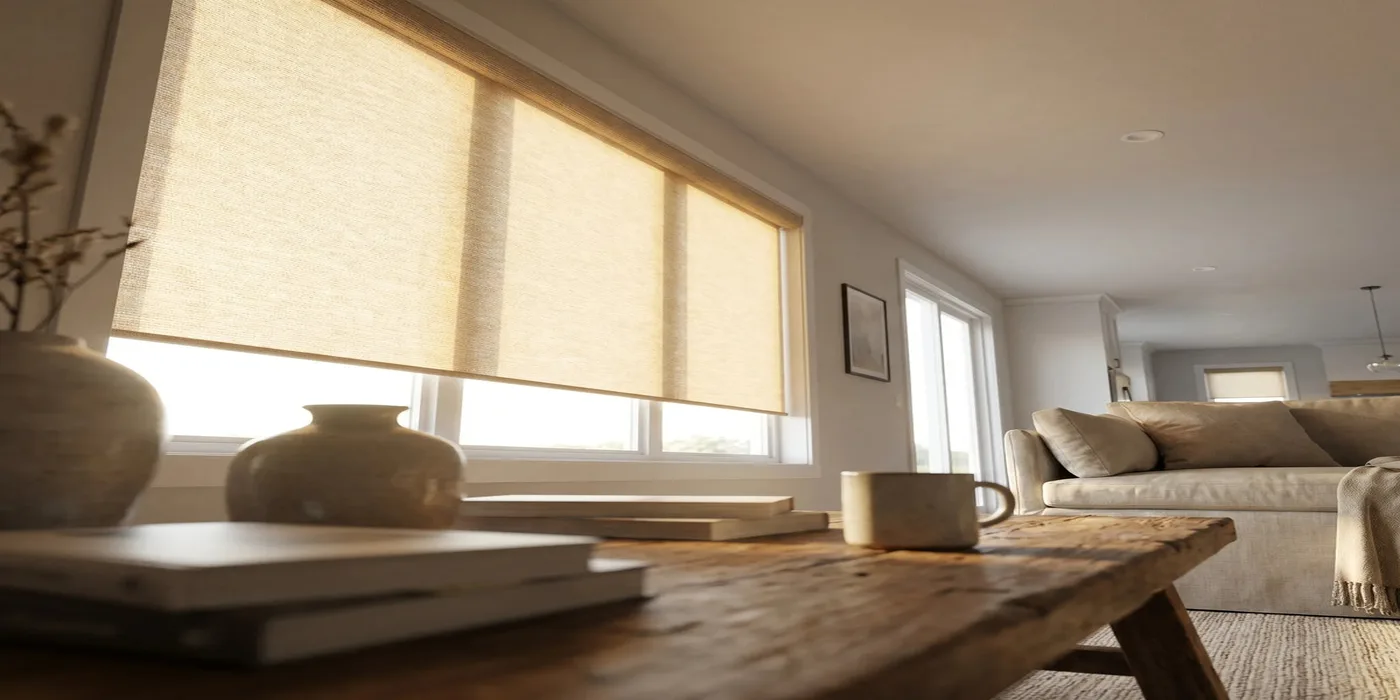
Roller and screen shades create a simpler horizontal profile. On very wide openings, the plan may require multiple coordinated shades rather than one unit. That introduces decisions about seams, control grouping, hembar alignment, edge gaps, and whether each shade needs to move independently.
Compare these options on the Hunter Douglas shades page before choosing a specific layout.
Decide how much view you want to preserve
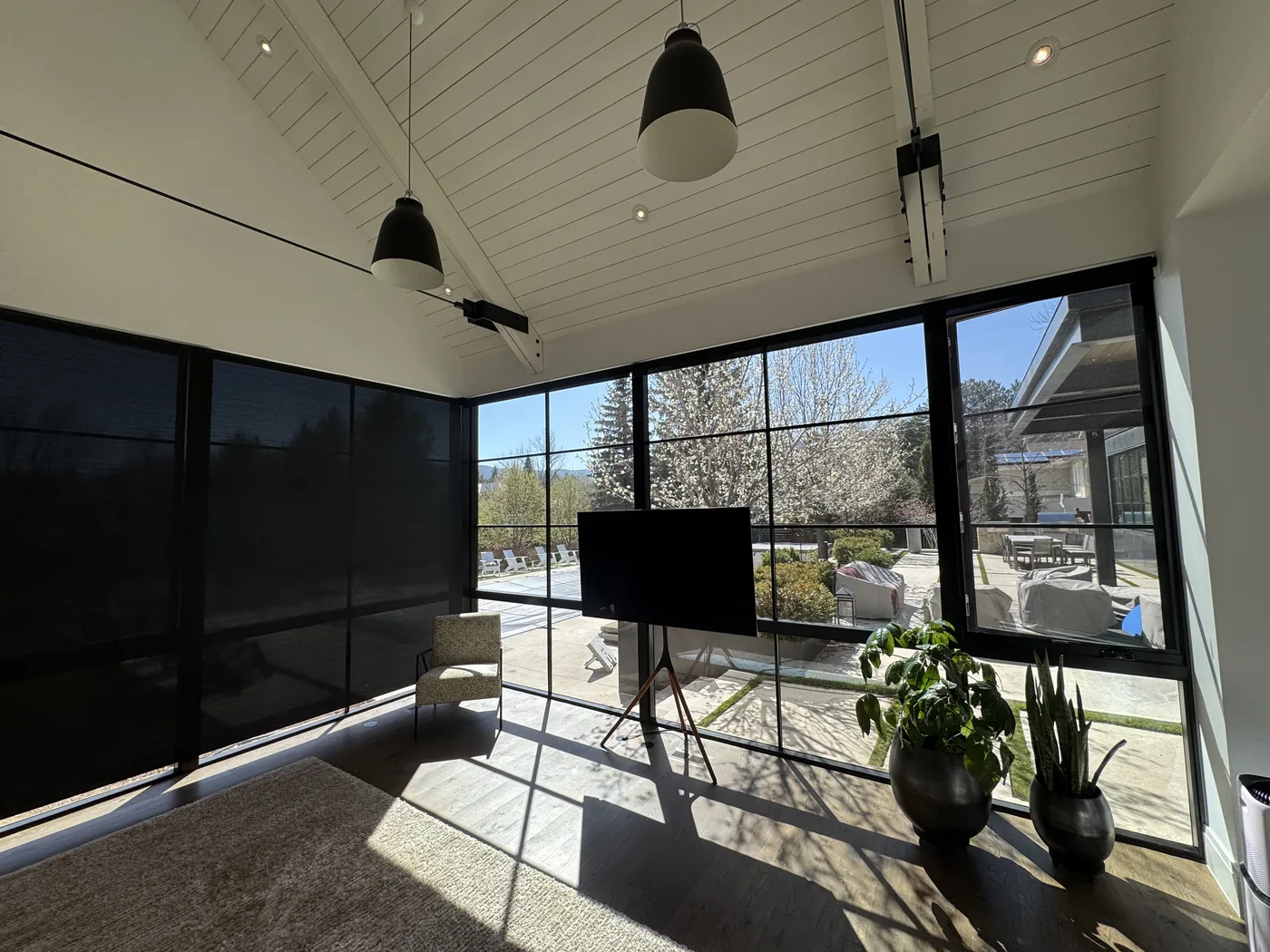
Screen fabrics can reduce glare across a large window while preserving some outdoor view. Compare samples at the glass: fabric openness and color, the direction of the sun, and room lighting all affect what you see.
A more open fabric usually preserves more view, but it can provide less glare control and privacy. A more closed or opaque fabric can reduce more light and view-through. At night, interior lighting can make a screen or sheer treatment less private than it appears during the day.
For Boulder, Colorado glass walls, compare samples at the actual exposure. Morning light on one elevation may call for a different solution than low afternoon sun on another. Matching color across rooms does not require identical opacity or openness at every window.
Plan seams, stacks, and visual alignment
Plan the whole window wall together. Decide whether separate shades should line up with the window divisions and check where each treatment will stack beside doors, furniture, and artwork. Multiple shades give you separate light control, but the gaps and controls also become part of the layout.
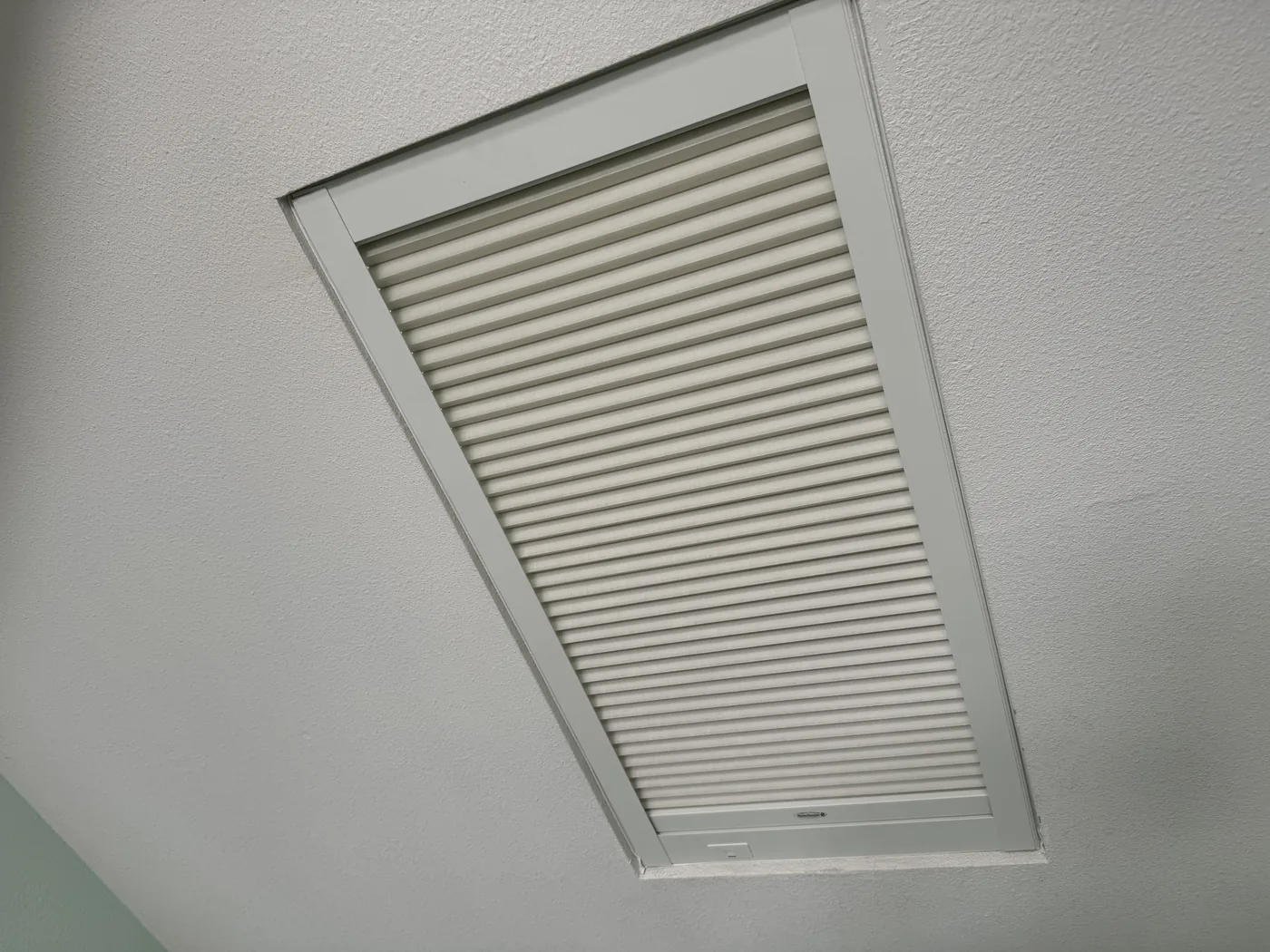
If the opening includes a sliding door, the treatment must preserve the primary passage. If it spans fixed glass, a center split or balanced panel layout may be more important. Tall glass requires attention to ceiling conditions, mounting surfaces, service access, and the finished position of the raised treatment.
Drapery can add softness and scale, either as an operating layer or stationary side panels. It also requires sufficient stack space, suitable hardware, and a plan for fabric fullness. The best result may combine a functional shade with decorative fabric rather than asking one treatment to solve every goal.
Choose an operating method after the treatment
Large, high, or frequently adjusted coverings may benefit from motorized control, but motorization should not be the starting point. First select the product, fabric, layout, and privacy behavior. Then confirm the compatible motor, power source, controls, charging or wiring access, hardware, and installation conditions.
Selected Hunter Douglas configurations may support PowerView® Automation. App, remote, scene, schedule, and integration features depend on the exact product, PowerView generation, firmware, gateway, driver, supporting hardware, and third-party equipment. The PowerView® App is required for programmed operation.
Howard's Draperies' motorized window coverings page explains the planning approach. A manual system may still be appropriate when a treatment is easy to reach and does not need frequent adjustment.
Frequently asked questions about large-window treatments
Can one shade cover a very large window?
Sometimes, but maximum dimensions and operating options vary by product, fabric, hardware, mount, and configuration. Multiple coordinated shades may be more suitable. Measurement is required before assuming one unit can cover the opening.
What is best for a wall of floor-to-ceiling windows?
Gliding panels, vertical sheers, screen shades, and coordinated roller shades are useful starting points. The best choice depends on view, glare, privacy, desired divisions, stack space, mounting surface, and access.
Do large window shades need motorization?
No. Motorization can make tall, hard-to-reach, or frequently adjusted treatments easier to operate, but compatible manual systems may suit accessible windows. Product and configuration should be selected before the operating method is finalized.
Next step
Plan your large-window layout at home
Howard's Draperies can help you plan coverage for a whole window wall, including the view, sunlight, privacy, and space for the treatments to open. We provide in-home consultations in Boulder and nearby Front Range communities, with measurements and professional installation planned around your windows.
Request an in-home consultation